Many young adults in Germany and across Europe have grown up in a world of rising rents, uncertain job markets and volatile energy prices. When every euro counts, it’s natural to look for bargains and discount deals. Always choosing the cheapest option can feel like a form of self‑defence. But what happens when saving money becomes a source of stress rather than security?
This article explores why extreme frugality isn’t always the smartest strategy. It highlights the hidden costs behind constant bargain hunting and offers a more balanced way to think about value.
Why Choosing The Cheapest Option Feels Safe
For many people, spending decisions are shaped by fear. Rising living costs and economic uncertainty make it feel like every purchase could push you closer to the edge of future insecurity. Young adults on probation periods or fixed‑term contracts in cities like Berlin, Hamburg, Cologne and Munich often don’t know what their income will look like six months from now.
When rent, groceries, and energy bills consume more than half of your budget, it’s understandable to avoid anything that looks like a luxury. Choosing the cheapest option isn’t about being stingy; it’s about trying to feel safe in a world where financial stability feels fragile.
Many people also carry spending guilt from growing up with constant reminders to save or from watching parents struggle during recessions. Opting for the lowest price gives a sense of control — at least until the anxiety creeps back the next time you shop.
Why Cheap Choices Sometimes Come From Fear
Always picking the lowest price isn’t only about thriftiness — it often reflects fear. The fear of an emergency bill that could wipe out your savings. The fear of future expenses like unexpected car repairs or medical costs. For young adults living on unstable income or facing high rent and energy bills, even small purchases can feel risky. Sometimes people are not buying the cheapest option because it is the best choice. They are buying it because it feels safer.
Fear of financial instability makes people hesitate to spend even when an item is necessary. They worry about losing progress they’ve painstakingly made toward building an emergency fund or paying off debt. The thought of making a mistake with money — buying the “wrong” brand or paying too much — can feel like a personal failure. Acknowledging these fears can help you understand your own behaviour and approach spending with more compassion.
When Saving Money Starts Creating Stress
At first, comparing prices and looking for deals can feel empowering. Over time, it can turn into an exhausting routine. You might spend hours scrolling through websites and reading reviews for small purchases. You may hesitate over every item in your basket, worried that there’s a better deal somewhere else.
This constant optimisation triggers decision fatigue — a state of mental exhaustion where each choice feels heavier than the last. When the brain is overloaded by endless small decisions, it becomes harder to trust your judgment and you start to feel irritable and overwhelmed.
If you find yourself second‑guessing everything from a coffee to a train ticket, saving money might be costing you peace of mind.
People who already feel financially exhausted by work and living expenses often have little energy left for endless cost comparisons. At some point the value of time and mental health outweighs a few euros saved.
Consider Lena, a young professional in Cologne. Her salary covers rent, student loan payments and modest savings, so she watches every cent. She spends hours each week looking for the cheapest groceries, comparing every clothing sale and fixing worn‑out items instead of replacing them. When friends invite her out for dinner, she checks the menu online and worries whether the price fits her budget. Over time, the constant optimisation makes her feel anxious and isolated. Lena realises she is spending more energy avoiding small expenses than enjoying the life she’s working so hard to build. Her story illustrates how striving to save can create its own form of exhaustion.
The Difference Between Cheap And Good Value
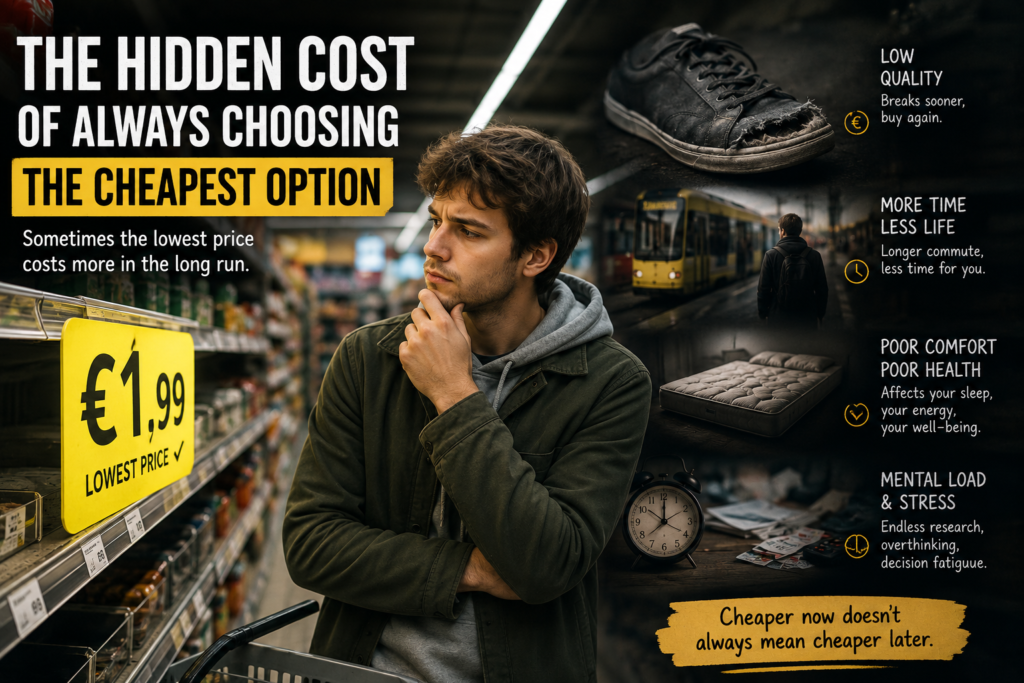
Not all low‑priced items are bad, but the cheapest option isn’t always the best value. Quality, durability and reliability matter — especially when resources are tight. Buying the most inexpensive pair of shoes might save money today, but replacing them three times a year costs more than investing in a sturdier pair.
The Utah State University Extension illustrates this with jeans: paying €50 for trousers that last two years is ultimately cheaper than buying €15 jeans that need to be replaced every few months.
Good value means considering cost per use, not just the price tag. Sometimes spending a little more on a well‑made appliance, coat or mattress reduces replacement costs and provides peace of mind. Reliable products also reduce the emotional toll of dealing with broken items and returns.
This approach isn’t about trading frugality for luxury. It’s about distinguishing between price and value — a mindset that can help you become financially stable over time.
The Cost Of Constantly Delaying Yourself
While waiting for sales or holding out for the perfect bargain can be smart, constantly postponing purchases has its own price. Putting off a dentist appointment because you’re worried about the bill can lead to more serious (and costly) dental problems. Delaying courses or professional development opportunities may slow your career growth and earnings potential.
Replacing worn‑out items with ever‑cheaper alternatives — or not replacing them at all — can affect your health and comfort. Maybe your winter coat has lost its insulation, but you refuse to buy a new one because you’re saving for a holiday that never happens. Maybe you cancel holidays every year to save money, only to feel increasingly burned out and disconnected. Saving money can become expensive when it prevents you from investing in yourself.
Consider a young professional in Munich who wants to improve their skills to earn a promotion. They compare dozens of online courses, searching for the cheapest option, but never sign up because there might be a better deal. In the meantime, colleagues with more confidence invest in themselves, finish their certifications and move ahead. The time spent hesitating becomes more costly than the course itself. Recognising when caution turns into self‑sabotage helps you invest wisely in your own growth and well‑being.
How Extreme Frugality Can Reduce Quality Of Life
There is a point at which saving money stops adding security and starts taking joy. Avoiding every small pleasure can leave you feeling isolated and deprived. Delaying necessary purchases, like replacing a worn‑out coat or repairing a bicycle, can create hidden costs such as illness or accidents.
Replacing everything with the cheapest alternatives may mean eating nutritionally poor food or living in uncomfortable housing. Constantly denying yourself can lead to emotional fatigue and resentment. When you spend all your time worrying about money, you may miss out on experiences that enrich your life and relationships.
The goal isn’t to splurge on every whim but to recognise that a healthier money mindset includes occasional treats, social activities and items that genuinely improve well‑being.
The Emotional Cost Of Constant Optimization
Always choosing the cheapest option can make shopping feel like a test you’re destined to fail. The mental load of researching every purchase and the guilt of spending a few euros more creates stress. Overthinking simple decisions drains energy that could be used for work, hobbies or relationships.
Some people spend more time worrying about money than enjoying the benefits of managing it well. They may feel guilty for buying a meal out with friends even after budgeting for it. Others fear that any discretionary spend will trigger a downward spiral into debt.
This emotional cost often outweighs the financial gain. An obsessive focus on savings can leave you feeling disconnected from your goals and anxious about the future. Balancing prudence with kindness to yourself helps you avoid burnout and cultivate a healthier relationship with money.
Why Time Is Also Money
The cheapest option often asks you to pay with time instead of money. Spending hours on forums and price‑comparison sites just to save a few euros can eat into your leisure and rest. Long commutes to reach a cheaper supermarket or a lower‑rent neighbourhood steal precious time you could use for family, hobbies or rest. Constantly researching and repairing low‑quality items not only tests your patience but also postpones the comfort and ease that quality products provide.
Time is a finite resource. When you choose a bargain that requires hours of maintenance or extra travel, you’re trading away moments you can never get back. Learning to value your time as much as your money helps you recognise when a more expensive, more convenient option is worth the investment. Your well‑being, relationships and productivity often depend on how you allocate both.
Real‑Life Examples Of False Savings
The hidden costs of always picking the cheapest option often show up in everyday decisions:
- Buying low‑quality products repeatedly: Cheap headphones or kitchen appliances may break quickly, forcing you to replace them often.
- Choosing the cheapest apartment and paying in commute time: A cheaper flat far from your workplace in Berlin might save on rent, but the long commute and higher transportation costs negate the savings — not to mention the loss of free time.
- Buying cheap shoes that wear out quickly: Poorly made shoes can cause discomfort and need frequent replacement, costing more over time.
- Cutting expenses that improve wellbeing: Skipping dental visits or buying only the cheapest food can lead to health issues and higher costs later.
Being mindful about saving money in Germany means weighing price against durability, health, and convenience. Sometimes paying a bit more upfront is an investment in your comfort and long‑term finances.
Signs You May Be Too Focused On Price
If you recognise these behaviours in yourself, it might be time to rethink your approach:
- Spending hours comparing minor purchases like kitchen utensils or socks.
- Feeling guilty about reasonable spending on hobbies or experiences.
- Always choosing the lowest price regardless of quality or user reviews.
- Avoiding investments in yourself, such as courses, tools or health appointments.
- Delaying necessary purchases until items break completely.
- Feeling feel financially behind if you don’t find the absolute cheapest deal.
Recognising these patterns can help you shift your focus from price to value and reduce unnecessary stress.
How To Think In Terms Of Value Instead Of Price
Moving away from price obsession toward a value‑oriented mindset takes practice:
- Consider long‑term cost: Before buying, ask yourself how long the item will last and whether it will need maintenance or replacement. Spread higher upfront costs over the life of the product to see the real value.
- Weigh quality and reliability: Read reviews and choose reputable brands when it matters (e.g., technology, safety equipment). A durable product might cost more now but save money and hassle later.
- Include time and convenience: Your time has value. If a cheaper option requires long commutes, constant repairs or extensive research, the savings may not be worth it.
- Assess wellbeing: A product or service that improves your health, reduces stress or enhances relationships can be worth the extra cost. Think of quality sleep, healthy food and safe housing as investments in yourself.
- Set a realistic budget: Allocate funds for necessities and personal enjoyment. This helps prevent spontaneous overspending while allowing for planned treats.
- Practice intentional spending: Decide in advance which areas you want to save on and where you are willing to spend more. This clarity reduces impulsive decisions and guilt.
Ultimately, thinking in terms of value means aligning your spending with your long‑term goals and personal values. It’s a strategy that encourages moderation and choosing stability over ambition when needed.
Can You Save Money Without Becoming Obsessed With It?
Yes. Financial health is not about spending the least amount possible; it’s about making decisions that support your long‑term well‑being. Intentional spending allows you to save for the future while living a fulfilling life in the present.
Creating a budget that covers essentials, savings and discretionary spending reduces anxiety. Learning to trust yourself and your plan builds financial confidence and reduces the need for constant optimisation.
Instead of chasing perfection, aim for balance: save for emergencies, invest in quality when it matters, and enjoy small pleasures without guilt. This approach fosters resilience and helps you avoid feeling financially trapped by your own austerity measures.
Frequently Asked Questions
Is choosing the cheapest option always bad?
Not necessarily. Sometimes the cheapest option offers perfectly adequate quality, especially for disposable items or when trying something new. The key is to consider the context and whether saving a small amount now will cost more later.
What is the difference between price and value?
Price is the amount you pay up front. Value includes durability, reliability, time saved, and how much the item or experience contributes to your well‑being. Good value doesn’t always mean high price — it means the benefits outweigh the costs over time.
Can being too frugal become unhealthy?
Yes. Extreme frugality can lead to stress, social isolation and neglecting self‑care. It may cause tension in relationships and feelings of deprivation. A balanced approach includes saving prudently while also spending on things that improve your health and happiness.
How do I stop overthinking purchases?
Set a budget for discretionary spending and commit to decisions once you’ve done reasonable research. Remind yourself that no one can optimise every single purchase. If a purchase aligns with your values and doesn’t harm your financial plan, let go of guilt and move on.
What is a healthy approach to saving money?
Save consistently for emergencies and long‑term goals, invest in quality where it matters, and allow yourself to enjoy life in a way that aligns with your values. A healthy approach balances security with satisfaction, supporting both present and future well‑being.
Conclusion
Choosing the cheapest option can be tempting when money feels tight, but it isn’t always the smartest decision. While bargains offer short‑term relief, constant penny‑pinching can lead to mental exhaustion, false savings and reduced quality of life. A value‑oriented approach — considering durability, time, convenience and well‑being — helps you make financial decisions that serve you better in the long run.
By shifting your focus from price to value and practising intentional spending, you can build resilience and financial well‑being without sacrificing your peace of mind.
My book on Gumroad:
https://ukandu0.gumroad.com/l/bteyh
Or on Amazon:
Build Financial Clarity
Join the Crown Altessa newsletter and receive:
• the free Financial Foundation Guide
• practical financial frameworks
• strategic decision-making insights
• tools designed to help you think long term about money and stability
If you want calmer, more structured financial thinking in an uncertain world, subscribe below.