
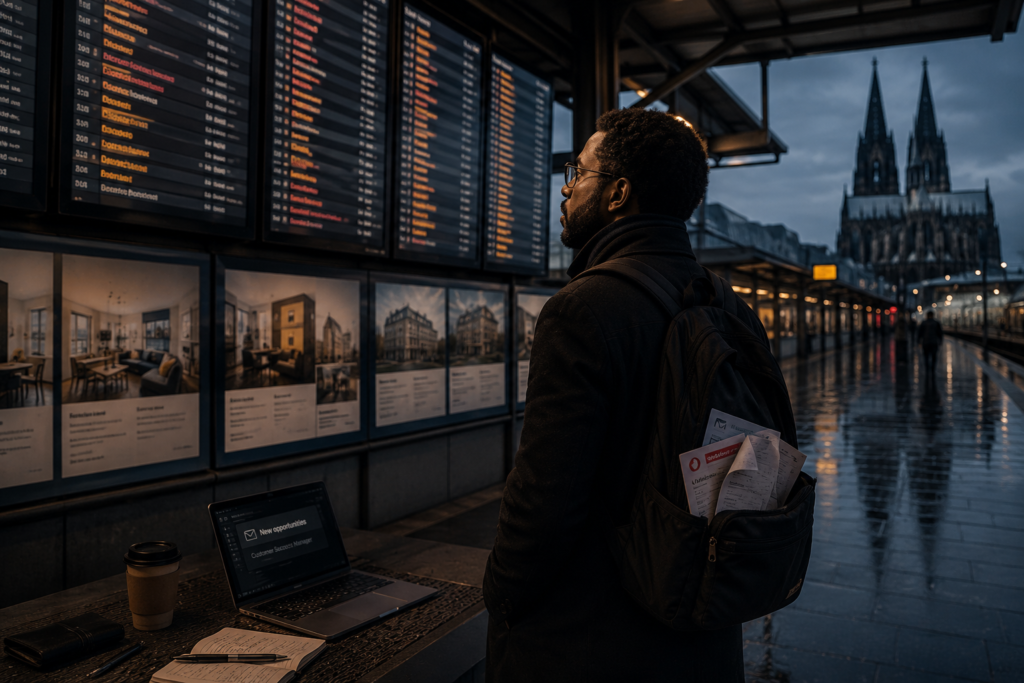
For many people in their twenties and thirties, the future no longer feels predictable.
A stable job, affordable housing, long-term financial security, and a clear path into adulthood once felt achievable with enough effort and patience. Today, many young adults feel like they are constantly adjusting to economic instability, rising living costs, and uncertainty about the future.
This feeling is not simply pessimism. It is often the result of daily financial pressure, unstable work conditions, and emotional exhaustion that quietly build over time.
Across Germany and much of Europe, many young adults are not asking how to become rich. They are asking a more basic question:
“How do I build a stable life without constantly feeling financially exposed?”
Why The Future Feels More Uncertain Today
One of the biggest reasons for future insecurity among young adults is that everyday life has become significantly more expensive while long-term stability feels harder to reach.
In cities like Berlin, Munich, Hamburg, and Cologne, rent prices have increased much faster than many salaries. Even people with full-time jobs often struggle to save money after paying for housing, transportation, groceries, insurance, and energy bills.
Inflation in Germany has made ordinary expenses feel heavier than they did a few years ago. Grocery shopping that once felt manageable now forces many people to constantly calculate and compare prices.
At the same time, the modern job market feels less secure.
Temporary contracts, company restructuring, layoffs, and unstable career paths have become common across many industries. Young adults who once expected steady career growth now feel pressure to constantly adapt, reskill, or prepare for uncertainty.
Even workers earning around €2,400–€2,800 net monthly may still struggle to build savings consistently in major German cities after paying rent and essential expenses.
Many people are delaying important life decisions because financial uncertainty makes long-term planning feel risky.
Some postpone:
- moving into their own apartment
- starting families
- buying homes
- changing careers
- relocating for better opportunities
This creates a quiet but persistent emotional tension. Life continues moving forward, but stability often feels just out of reach.
For many young adults Germany is no longer simply about building wealth. It is about trying to maintain balance inside an unstable economy.
The Emotional Weight Of Constant Uncertainty
Living with long-term uncertainty affects more than finances.
It affects energy, confidence, motivation, and emotional well-being.
When people constantly worry about money, work, or the future, the mind rarely feels fully at rest. Even during quiet moments, many continue mentally calculating expenses, thinking about job security, or worrying about unexpected emergencies.
Over time, this creates emotional fatigue.
Some people describe it as feeling permanently “on alert.” Others feel emotionally numb or exhausted without understanding why.
Modern financial pressure often creates:
- fear of falling behind
- anxiety about making mistakes
- guilt around spending money
- difficulty relaxing
- pressure to appear successful
- fear that stability may disappear suddenly
This emotional exhaustion is especially common among young adults who feel they must constantly perform, improve, and compete just to maintain a normal standard of living.
The pressure is rarely dramatic. It is usually quiet and repetitive.
A rising electricity bill.
A rent increase.
A temporary work contract ending.
A sudden medical expense.
A rejected apartment application.
Small pressures repeated over months or years can deeply affect emotional stability.
For some people, the exhaustion no longer comes from one major crisis, but from managing dozens of small financial pressures at the same time. Bills, subscriptions, insurance paperwork, banking notifications, rising service costs, bureaucracy, and endless small financial decisions quietly consume mental energy throughout the week. Over time, this constant micro-stress can create a sense of mental overload that is difficult to explain to others but deeply affects emotional well-being.
Why Planning Long-Term Feels Harder Than Before
Long-term planning becomes difficult when short-term stability feels uncertain.
Many young adults want to build savings, invest in their future, or create stable routines, but the unstable economy often makes those goals feel fragile.
Saving money is harder when basic costs continue rising faster than income.
Career anxiety also plays a major role. Many people no longer expect to stay in one career path for decades. Industries change quickly, technology evolves constantly, and job insecurity creates fear around making long-term commitments.
This uncertainty affects personal life as well.
Some young adults delay:
- relationships
- marriage
- having children
- buying property
- relocating
- changing jobs
- starting businesses
Not because they lack ambition, but because financial instability makes major decisions feel risky.
In some cases, people remain living with parents longer than expected because independent housing feels financially unrealistic.
Others avoid taking opportunities because they fear losing the little stability they currently have.
This form of delayed adulthood has quietly become normal across many parts of Europe.
Why Technology And AI Increase Future Anxiety
Technology has always changed the workplace, but recent developments in artificial intelligence have increased uncertainty for many young adults.
Across different industries, people are watching tasks become automated faster than expected. Administrative work, customer support, content production, data analysis, and even creative tasks are increasingly supported by AI systems.
For many workers, the fear is not necessarily immediate unemployment. It is the uncertainty surrounding long-term career stability.
Some people worry that skills they spent years developing may become less valuable over time. Others feel pressure to constantly learn new tools, platforms, or technologies simply to remain employable in a rapidly changing market.
This creates a quiet but persistent form of career anxiety.
Young adults often feel they cannot stop improving, studying, adapting, or updating their skills because industries now evolve much faster than before. In some professions, the feeling of becoming professionally outdated can appear surprisingly early in a career.
At the same time, many people are still trying to understand how AI will realistically affect their industries over the next decade. This uncertainty itself can become emotionally exhausting.
Most young adults are not reacting with panic. They are quietly trying to adapt to rapid change while hoping their careers remain stable enough to build a predictable future.
The Internet Creates Unrealistic Expectations
Social media has changed how people compare themselves to others.
Online, it often appears that everyone else is traveling constantly, buying property, earning large incomes, building businesses, or living emotionally perfect lives.
In reality, much of online success is carefully curated.
Many people only post their highlights while hiding debt, stress, loneliness, or uncertainty behind the scenes.
Still, constant exposure to these images can create emotional pressure.
Young adults may feel:
- financially behind
- professionally behind
- socially behind
- emotionally behind
Even when they are progressing normally.
The pressure to “have life figured out” by a certain age can quietly increase future anxiety and emotional exhaustion.
This is especially difficult during periods of economic instability, where many people are already struggling privately while comparing themselves publicly.
Reducing comparison culture can sometimes improve emotional clarity more than chasing unrealistic perfection.
Articles discussing topics like feeling financially behind or modern loneliness resonate strongly today because many people quietly experience the same emotional pressure.
How Economic Pressure Changes Daily Life
Economic pressure affects daily behavior in subtle ways.
Some people begin avoiding social activities because they feel guilty spending money. Others overwork themselves out of fear that slowing down could create financial problems later.
Burnout has become increasingly common among people trying to maintain stability while navigating constant uncertainty.
Modern financial pressure can lead to:
- emotional spending
- difficulty sleeping
- lack of motivation
- isolation
- fear of taking risks
- overworking
- emotional exhaustion
- reduced social connection
In many cases, people are not lazy or unmotivated. They are mentally overloaded.
Even simple decisions can feel exhausting when the brain constantly focuses on survival, budgeting, or future uncertainty.
Some people also cope through emotional spending because short-term comfort temporarily reduces stress. Discussions around emotional spending habits have become more relevant because financial stress often affects emotional behavior directly.
Others become highly restrictive with money, avoiding experiences or opportunities entirely out of fear.
Neither extreme creates long-term emotional stability.
Signs You May Be Living In Survival Mode
Sometimes people adapt to stress so gradually that they stop recognizing how overwhelmed they have become.
Here are some common signs of survival mode:
- constantly worrying about money
- checking bank balances repeatedly
- struggling to relax even during free time
- difficulty making long-term decisions
- avoiding future planning
- emotional exhaustion without clear reason
- feeling guilty after small purchases
- fear of unexpected expenses
- lack of motivation despite working hard
- feeling mentally “stuck”
- postponing important life goals indefinitely
Living in survival mode for long periods can affect emotional resilience, relationships, and overall health.
Recognizing the pattern is often the first step toward rebuilding stability.
Practical Ways To Rebuild Stability
Rebuilding stability rarely happens quickly.
For most people, it happens through small, realistic adjustments repeated consistently over time.
One of the most important steps is reducing financial chaos wherever possible.
This may include:
- tracking spending carefully
- building a small emergency fund
- reducing invisible subscriptions
- creating stable routines
- limiting impulsive online spending
- avoiding unnecessary debt
- learning practical financial habits slowly
Articles about saving money in Germany or financial stress management often focus on small behavioral improvements because emotional stability usually improves when financial unpredictability decreases.
It is also important to avoid overwhelming self-improvement pressure.
Not every skill needs to become a side hustle.
Not every hobby needs monetization.
Not every year needs dramatic transformation.
Sometimes stability itself is progress.
Building structure can also help emotionally:
- regular sleep schedules
- healthier routines
- consistent budgeting habits
- limiting social comparison
- focusing on manageable goals
These small actions may seem simple, but consistency often rebuilds emotional security more effectively than chasing extreme success.
Why Stability Matters More Than Perfection
Many young adults grew up believing success would eventually create emotional security.
But modern life has shown many people that constant comparison and perfectionism often increase anxiety rather than reduce it.
A slower, more stable life is not failure.
In many cases, emotional resilience comes from:
- realistic expectations
- manageable financial habits
- supportive relationships
- reduced comparison
- gradual progress
- accepting uncertainty without panic
Financial resilience is rarely built overnight.
Most stable lives are built quietly through repeated practical decisions rather than dramatic breakthroughs.
Focusing on stability instead of perfection can reduce future anxiety significantly.
Frequently Asked Questions
Why do young adults feel insecure about the future?
Many young adults face financial uncertainty, rising living costs, unstable work conditions, and emotional pressure from modern life. These factors make long-term planning feel difficult and unpredictable.
Is it normal to feel financially unstable?
Yes. Many people across Germany and Europe currently experience economic pressure due to inflation, housing costs, and job insecurity. Feeling uncertain does not mean you are failing.
Why does adulthood feel harder now?
Modern adulthood often involves higher living costs, unstable career paths, constant digital comparison, and growing uncertainty around long-term financial stability.
How can I stop worrying about the future?
You may not eliminate uncertainty completely, but reducing financial chaos, creating routines, limiting comparison, and focusing on small practical improvements can help rebuild emotional stability.
How do I regain financial stability slowly?
Start with manageable habits:
- budgeting carefully
- building emergency savings slowly
- reducing unnecessary spending
- improving useful skills gradually
- focusing on stability rather than perfection
Progress usually happens through consistency, not sudden transformation.
Conclusion
For many young adults, uncertainty about the future has become part of everyday life.
Rising living costs, economic instability, job insecurity, technological change, and emotional exhaustion have changed how people think about adulthood, stability, and long-term planning.
But uncertainty does not mean hopelessness.
Many people are slowly rebuilding stability through practical habits, emotional resilience, realistic expectations, and smaller but more sustainable goals.
The future may no longer feel perfectly predictable, but stability can still be built gradually — one realistic step at a time.
My book on Gumroad:
https://ukandu0.gumroad.com/l/bteyh
Or on Amazon:
Build Financial Clarity
Join the Crown Altessa newsletter and receive:
• the free Financial Foundation Guide
• practical financial frameworks
• strategic decision-making insights
• tools designed to help you think long term about money and stability
If you want calmer, more structured financial thinking in an uncertain world, subscribe below.