
Why So Many People In Germany Struggle To Save
The cost of living has outpaced wages for many young adults. In Germany, the rent index rose by 8.6 percentage points between January 2021 and January 2025, and households now spend around 25.2 % of their disposable income on housing—well above the EU average. A one‑bedroom apartment in Berlin easily costs €1 050 or more each month, and in Munich or Hamburg the price can approach €1 200–€1 500. When you add a deposit, moving costs and agent fees, the upfront expense is even heavier. Basic utilities—heating, water and electricity—run between €200 and €480 per month, and internet adds another €30–€50. Groceries that once cost €40 a week now range from €200 to €350 per month, and dining out is becoming a treat rather than a habit. Mandatory health insurance can cost €120–€400 monthly, depending on whether you are in a public or private plan. When you earn €2 300–€2 500 net and half of it disappears into housing and bills, saving feels like an illusion. Transportation isn’t cheap either: the Deutschlandticket costs €63 per month for unlimited regional travel, and owning a car can exceed €300–€600 when you account for fuel, insurance and repairs. Inflation means that everything from bread to public transit creeps up in price each year, while starting salaries barely budge. Together, these factors make it clear why so many young adults feel like they are living paycheck to paycheck in Germany.
The Emotional Weight Of Financial Pressure
Money worries aren’t just numbers on a spreadsheet; they weigh on you every day. Constantly thinking about whether you can cover rent and bills creates a background hum of stress. You may lie awake wondering how you would handle a surprise expense or fret about falling behind on payments. Feeling behind compared to your peers can erode confidence—even if you’re doing everything you can. Many young adults quietly carry shame about struggling to save money while scrolling past images of friends on holiday or buying new cars. Living alone in a small flat can amplify those feelings: it’s harder to share costs, and it’s easy to feel disconnected. Financial pressure often feels heavier when it coincides with social isolation and loneliness, a reality for many in big cities where rent and work consume most of your energy. Recognising these emotions as normal reactions to challenging circumstances is important; you’re not lazy or failing because you’re anxious about money.
Why Young Adults Feel Financially Stuck
Across Germany, work is becoming more precarious. Entry‑level salaries rarely match rising living costs, and many new positions are temporary contracts or freelance gigs without benefits. Without a predictable income, it’s hard to commit to a long‑term lease or build an emergency fund. Some industries pay well only after years of experience, leaving early‑career workers in Berlin or Hamburg scrambling to cover rent. Meanwhile, housing markets in major cities have become so expensive that even dual-income couples struggle financially. Student debt and financing plans for electronics eat up whatever surplus remains. With no buffer, one month of illness or a gap between jobs can wipe out your savings. It’s understandable that young adults struggling financially feel stuck: the system rewards those who already have resources, while newcomers face higher entry costs.
The Hidden Expenses That Destroy Savings
Big bills grab your attention, but small charges quietly erode your bank balance. Food delivery fees make convenience costly: ordering takeaway twice a week at €20 per meal adds up to over €160 a month. Subscriptions multiply without notice—music services, fitness apps, cloud storage, streaming and gaming platforms can collectively exceed €600 per year if left unchecked. Transport costs go beyond tickets: occasional taxi rides at €10–€15, bike repairs or parking fees quickly mount. Buy‑now‑pay‑later schemes spread payments over months but often add interest and encourage purchases you might not otherwise make. Moving house requires paying another deposit, renting a van and taking time off work. Even small impulse buys—extra coffees, convenience foods or clothing sales—chip away at your budget. Recognising these hidden expenses helps you plug leaks before they drain your savings.
The Social Pressure That Makes Saving Even Harder
Pressure doesn’t just come from bills. In a city like Berlin or Cologne, colleagues might invite you to weekend trips or dinners that cost €25 per cocktail and €80 for a night out. Social media amplifies this sense that everyone is travelling, eating out and buying designer clothes. Photos of rooftop bars in Hamburg or beach getaways to Mallorca can make you feel like you’re the only one staying home. Fear of missing out leads many young adults to spend on flights, festivals or trendy wardrobes—money that could have gone toward savings. Sometimes we spend simply to avoid loneliness: joining friends for expensive brunches or signing up for subscriptions to feel part of a group. These social pressures are real, and acknowledging them can help you make more intentional choices.
Example Monthly Budget In Germany
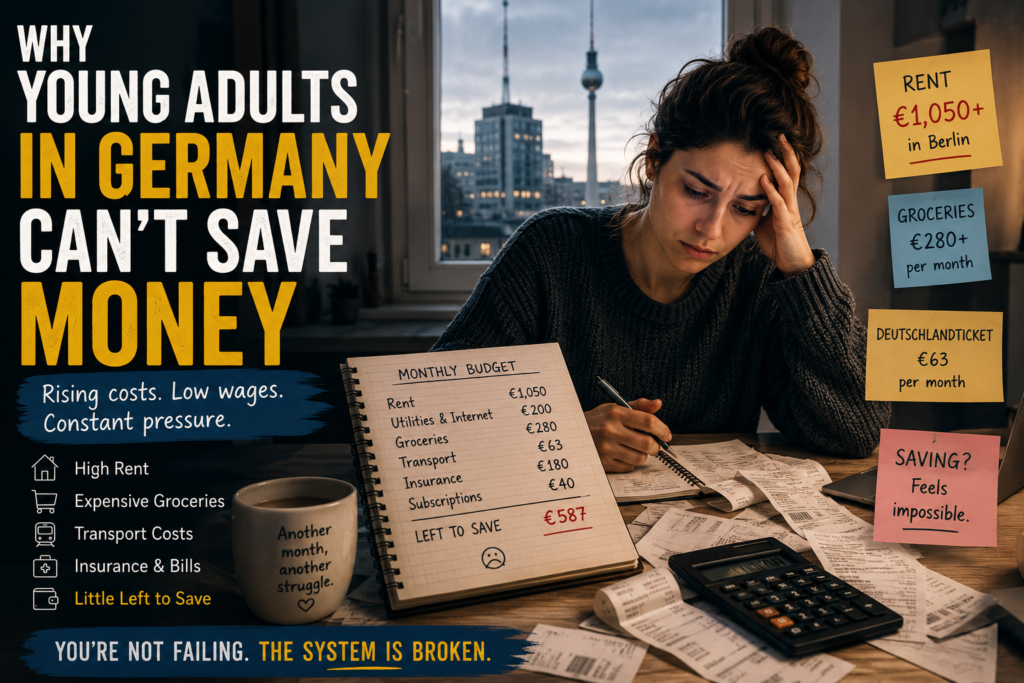
Below is a realistic monthly budget for a young worker earning around €2 400 net. This example shows how income gets absorbed by essential costs and why savings are hard to grow.
| Expense | Monthly Cost |
|---|---|
| Rent (small Berlin flat) | €1 050 |
| Utilities & internet | €200 |
| Groceries & household | €280 |
| Transport (public pass) | €63 |
| Health insurance & other insurance | €180 |
| Subscriptions & entertainment | €40 |
| Remaining savings | €587 |
Even with careful budgeting, more than half of the salary goes toward housing and basic living costs. The remaining €587 must cover any unexpected expenses, clothing, social activities and long‑term savings. If groceries, utilities or insurance cost more than expected—or if you splurge on a few takeaways—this cushion evaporates quickly.
Why Saving Money Was Easier For Previous Generations
Older generations entered adulthood in a different economic climate. Housing was cheaper relative to income, with many young workers spending far less than 30 % of their take‑home pay on rent. Entry‑level jobs often came with permanent contracts and predictable wages. Living costs—from groceries to transport—were lower, and there were fewer recurring subscription costs. The ability to buy a modest home on a single salary and access affordable public services meant that saving for the future was more straightforward. Today’s rising prices Germany and higher entry costs mean that your parents’ savings habits may not translate directly to modern conditions. Acknowledging this gap helps explain why saving feels harder now without blaming yourself.
Practical Ways To Save Money Despite Rising Costs
While you can’t control rents, you can adjust how you manage your money. Start with a budgeting system that divides your income into needs, wants and savings; the 50/30/20 rule is one flexible option. Track every euro for a month using an expense tracking method. You might discover subscriptions or habits you forgot about. Cook at home more often; cutting two takeaway meals a week can save €80–€100 per month. Evaluate your subscriptions—if you use a streaming service only occasionally, cancel or downgrade. Avoid accumulating new debt; pay credit cards in full and be wary of BNPL schemes. Build an emergency fund, even if you start with €20 a week—having just €500 set aside provides breathing room for unexpected expenses. Consider additional income carefully: freelancing, tutoring or selling unwanted items can provide extra cash without sacrificing your main job. Separate your accounts to avoid dipping into savings, and automate transfers right after payday. Adopting a personal finance system can make these habits automatic, as explained in our guide on building a personal finance system.
How To Rebuild Financial Stability Step By Step
Step 1: Track your real expenses. Write down every purchase for a month to see where your money actually goes. Use a simple spreadsheet or an app; being honest about spending is essential.
Step 2: Reduce invisible spending. Cancel unused subscriptions, shop at discount supermarkets and switch to cheaper mobile or internet plans. These small changes free up cash without major lifestyle sacrifices.
Step 3: Create a survival budget. List your non‑negotiable expenses—rent, food, transport, insurance—and calculate how much you need to cover them. Compare this figure with your income; if there’s a gap, look for ways to cut costs or increase income.
Step 4: Build a small emergency fund. Aim for one month’s rent and basic expenses. Save automatically right after you’re paid; even €20 a week adds up. Once you reach your first milestone, slowly expand the fund.
Step 5: Focus on stability before luxury. Use bonuses, tax refunds or unexpected income to strengthen your emergency buffer, pay off debt or invest in skills. Only after you’ve built a financial cushion should you consider lifestyle upgrades.
Frequently Asked Questions
Why is Germany becoming so expensive? Several factors drive rising costs: housing supply hasn’t kept pace with demand; materials and energy prices have increased; and wages have grown slowly. Rent indices rose 8.6 percentage points between 2021 and 2025, and households now spend a quarter of their disposable income on housing.
Why is saving money difficult today? High rents, rising utilities and grocery prices, mandatory health insurance costs and stagnant wages all erode disposable income. Young workers often start on short‑term contracts or freelance gigs, making it hard to build a buffer.
How much should I save monthly? Aim to save at least 10 % of your net income, but any amount is better than nothing. Focus on consistency—setting aside €50 a month builds a €600 buffer in a year.
Is it normal to struggle financially in your 20s? Yes. Many young adults spend over half their income on rent and bills, making it hard to save. Struggling doesn’t mean you’ve failed; it reflects a challenging economic environment.
How do I survive financially in Germany? Share costs where possible, track your spending, reduce hidden expenses, build an emergency fund and focus on stability before luxury. Articles on financial stability and overspending habits offer more practical tips.
Conclusion
Feeling like saving money is impossible is a common reaction to today’s high living costs, and you are not alone. Many young adults across Germany are living through the same pressure as rents climb, contracts remain unstable and expenses creep upward. Struggling to save does not mean you are failing—it often reflects rising costs, unstable work and modern financial pressure. Rent, utilities and groceries consume most of your income, leaving little room to breathe. But small, steady changes can improve your situation. Track where your money goes, cut hidden costs, build a modest emergency fund and avoid new debt. Save your first €500; then keep going. Progress is slow and often invisible, but habits compound. Focus on consistency and stability rather than quick fixes. Over time, careful management and realistic expectations will help you regain control and reduce financial stress.
My book on Gumroad:
https://ukandu0.gumroad.com/l/bteyh
Or on Amazon:
Build Financial Clarity
Join the Crown Altessa newsletter and receive:
• the free Financial Foundation Guide
• practical financial frameworks
• strategic decision-making insights
• tools designed to help you think long term about money and stability
If you want calmer, more structured financial thinking in an uncertain world, subscribe below.