
Why Rent Feels Impossible Today
Across Germany and much of Europe, rents have risen far faster than pay. In Berlin, a modest one‑bedroom flat of about 50 m² now averages €1 050 per month—and that’s for an unfurnished unit. Hamburg’s median rent for existing and newly built apartments reached €18.12 per square metre in the second half of 2025, with prime offers nearing €28.70 per square metre. Munich remains the country’s most expensive city, where new contracts cost €24.65 per square metre and prime rents exceed €36 per square metre. At those rates, a 50 m² apartment can easily cost €1 200 to €1 500 a month. Deposits of two to three months’ rent, agent fees and moving costs add thousands more up front. Meanwhile, net wages for many young professionals hover around €2 200–2 500 a month. Add €200–300 for utilities and internet, €49 for a regional public transport pass and mandatory health insurance contributions that can exceed 14 % of gross income, and it’s clear why rent feels impossible. Rising grocery prices, fueled by energy costs and supply disruptions, have pushed a weekly shop from €50 to €70 or more. In a city like Munich or Hamburg, just covering housing, food and basic services can consume 60 % or more of a young worker’s income. With wages lagging and living costs climbing, rent inflation leaves little breathing room.
Why High Rent Creates Constant Financial Stress
When rent consumes a huge slice of your income, there’s little left to save or invest. A young designer earning €2 400 net in Hamburg might pay €1 100 for a small flat, leaving €1 300 to cover everything else. After health insurance, a transit pass, groceries and utility bills, there’s not much left for an emergency fund. One unexpected expense—a dental bill, a broken laptop or a train ticket home—can derail the month. This creates a cycle of living paycheck to paycheck, where each month begins at zero. The fear of falling behind on rent or being hit by a surprise bill causes chronic stress. It becomes hard to plan a future when you’re juggling due dates and payment reminders. Emotional exhaustion sets in, and the constant vigilance around money decisions can make you anxious and irritable. Goals like buying a home, starting a family or building a retirement fund feel distant when simply staying afloat is a battle. Delayed milestones also bring social pressure: friends may seem further ahead, and you worry that you’re failing. Recognising that high rent plays a big role in this stress can help you focus on what you can control.
Example Monthly Budget in Berlin
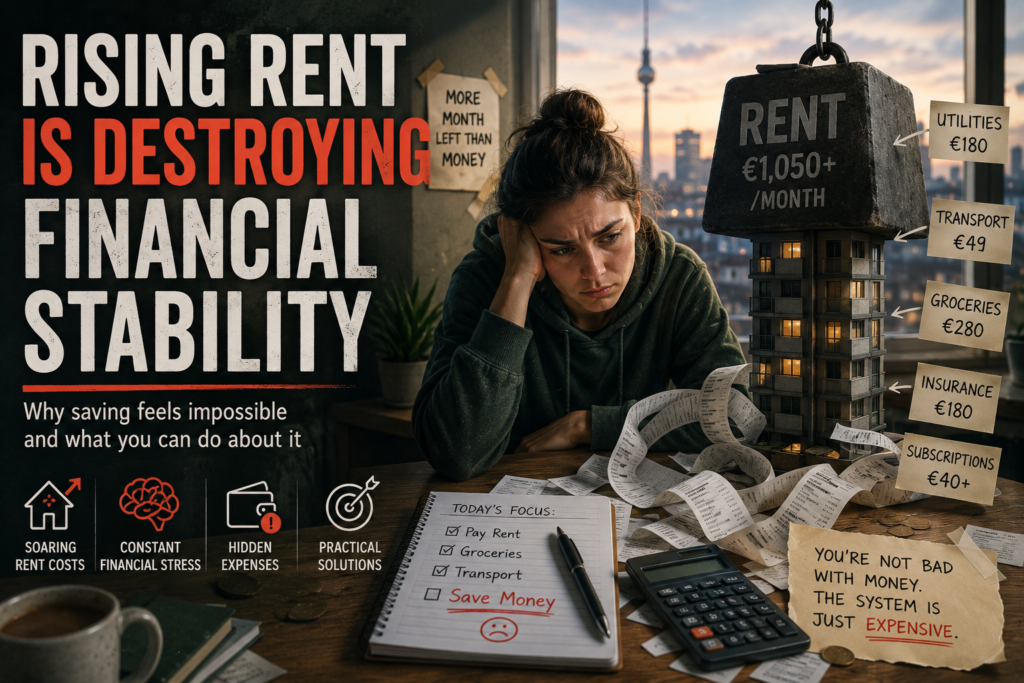
To make the numbers more tangible, here’s a realistic monthly budget for a single worker earning about €2 400 net in Berlin. This breakdown shows how quickly housing and living costs consume income:
| Expense | Monthly Cost |
|---|---|
| Rent | €1 050 |
| Utilities & Internet | €180 |
| Groceries | €280 |
| Transport | €49 |
| Health insurance & other insurance | €180 |
| Subscriptions & entertainment | €40 |
| Remaining savings | €621 |
More than half of the take‑home pay goes toward rent and essential bills. Even modest subscriptions and entertainment costs add up, leaving just a few hundred euros to put aside. This example highlights why saving can feel impossible when rent is high and why careful budgeting and cost‑cutting measures are crucial.
How Rent Impacts Young Adults Emotionally
The numbers tell one story; feelings tell another. Paying over half your income to a landlord can feel like pouring money down a drain, especially when wages are stagnant. Hopelessness surfaces when you realise that, despite working full‑time, you can’t build savings. Many young adults describe feeling stuck, as if they’re running hard but not moving forward. Living alone adds to the weight; there’s no one to share costs with, and the quiet of a small flat can amplify worries. Loneliness and social isolation are common in large cities, where long hours and high costs leave little time or money for socialising. You may feel embarrassed about your situation, particularly when social media is filled with curated images of success. The pressure to keep up appearances—nice clothes, dinners out, trips abroad—pushes some people to spend more than they can afford, deepening their struggles. Understanding that these emotions are a normal response to real financial pressure helps you approach them with compassion rather than shame.
The Hidden Costs That Make Rent Worse
Rent is just the headline figure; dozens of smaller costs lurk underneath. Utilities—heating, electricity and water—can add €100–€150 per month, especially in older buildings with poor insulation. Internet and mobile phone contracts easily run €40–€60 together. A monthly public transport ticket costs around €49 in many German cities, while owning a car brings insurance, fuel and maintenance bills. Subscriptions pile up: music at €9.99, gym at €25–40, streaming at €12.99, cloud storage at €2.99, gaming services and magazine apps. Taken individually they seem harmless, but together they can exceed €600 annually. Food inflation means groceries that cost €50 per week a few years ago now approach €70. Buying furniture for a new apartment or replacing a broken appliance can cost hundreds upfront. Buy‑now pay‑later schemes break large purchases into manageable payments but charge interest and fees that quietly inflate the price. Moving to a new flat requires paying another deposit, renting a van and taking time off work—expenses that quickly add up. These hidden costs make it even harder to survive high rent.
Why So Many Young Adults Struggle To Save
Saving requires surplus, but high rents and low wages leave little room. When over 60 % of your income goes towards housing and bills, there’s simply not much left. Unstable contracts and freelance work are common in creative and tech industries; gaps between projects can wipe out savings. Starting salaries in many fields haven’t kept pace with inflation, meaning purchasing power has actually fallen. Student loans or financing plans for electronics can eat up whatever surplus remains. Inflation erodes the value of the money you do manage to set aside, making it feel like you’re running on sand. Even those who tighten their budgets may find progress slow, which can be demotivating. The reality is that rent too expensive is the single biggest barrier to building wealth for many young adults. Acknowledging this doesn’t solve the problem, but it helps shift blame away from individual “discipline” and towards structural factors.
Practical Ways To Survive High Rent
While you can’t control the rental market, you can adapt. Shared apartments reduce costs significantly; splitting a three‑bedroom flat with two friends may bring your rent down to €500–600 including utilities. If moving isn’t an option, create a clear budgeting system that divides your income into necessities, wants and savings. Our step‑by‑step guide on building a personal finance system shows how to allocate funds automatically, so you’re not tempted to overspend. Track your spending using a simple method like the T.R.A.C.K. approach from our expense tracking guide; awareness is the first step to change. Cook at home and pack lunches—reducing weekly takeaway meals from three to one can save €50–60 a month. Evaluate your subscriptions and cancel or downgrade those you seldom use; even a €10 saving per month adds up. Avoid taking on new debt unless it’s essential; pay off credit cards in full to escape high interest. Negotiate bills where possible; loyalty rarely yields savings, so switching providers may lower your internet or insurance cost. Build an emergency fund, however small; aim for one month’s rent first, then gradually expand it. Consider side income carefully—freelance work, tutoring or selling unused items can help, but ensure it doesn’t jeopardise your main job or well‑being. Our article on overspending habits offers additional strategies to curb unnecessary outflows.
Small Financial Habits That Help Build Stability
Small habits compound into big changes. Separate your accounts: one for bills, one for spending and one for savings. Automate a modest transfer into your savings account immediately after each payday—it might be €20 today, but it builds a cushion over time. Use cash or a pre‑loaded debit card for discretionary spending; when the money runs out, you stop. Delay non‑essential purchases by 24 hours to curb impulse buying. Review your bank statements monthly to spot fees, subscriptions and patterns you might miss. Our 50/30/20 budgeting article offers a flexible framework that balances needs, wants and savings. And if you’re struggling to get started, read our piece on feeling financially behind for emotional context and gentle encouragement. The goal isn’t perfection; it’s consistency.
Step‑by‑Step: How To Regain Control Despite High Rent
Step 1: Calculate real monthly survival costs. List your rent, utilities, insurance, transport, groceries and mandatory fees. Seeing the total—including the €49 public transport pass and insurance contributions—clarifies how much you actually need.
Step 2: Cut invisible recurring expenses. Audit subscriptions, memberships and services. Cancel or pause anything you don’t use regularly. Switching to a cheaper phone plan or energy provider can free up money each month.
Step 3: Build a small emergency buffer. Aim for one month’s rent and living costs, even if it takes a year. Save a fixed amount automatically; seeing the balance grow will motivate you. As your buffer grows, you’ll worry less about unexpected bills.
Step 4: Reduce emotional spending. Recognise when you’re buying things to cope with stress or boredom. Find lower‑cost ways to comfort yourself—walking, reading, meeting a friend—so you don’t sabotage your budget.
Step 5: Focus on stability before luxury. Put windfalls, bonuses or tax refunds into your emergency fund rather than towards lifestyle upgrades. Once you’ve built a stable base, you can add small comforts without stress.
Frequently Asked Questions
Why is rent so expensive now? Housing supply hasn’t kept up with demand in many European cities, and construction costs have risen. In places like Munich, median rents reached €24.65 per square metre due to a tight market. Regulatory caps often apply only to existing contracts, so new leases reflect the open market, which drives prices up.
How much rent is too much? A common rule of thumb is to spend no more than 30 % of your net income on housing. In reality, many young adults spend 40–60 % of their income on rent, especially in high‑cost cities. If rent leaves you with nothing for savings or emergencies, it may be unsustainable.
Why is saving difficult when renting? High rent leaves little disposable income. Inflation has made groceries, utilities and services more expensive, while wages have stagnated. Irregular freelance work or fixed‑term contracts add uncertainty. With limited surplus, building an emergency fund takes longer.
How do I survive financially with high rent? Share accommodation, track every expense, cook at home, negotiate bills and avoid unnecessary debt. Use a budgeting system to organise your income, and build a small emergency fund. Over time, these practices create breathing room.
Is it normal to struggle financially in your 20s? Yes. Many people in their 20s juggle high rents, low pay and sometimes student debt. Struggling doesn’t mean you’ve failed; it reflects a challenging economic environment.
Conclusion
Rising rents are a major drag on financial stability. They absorb income that could otherwise fund savings, investments or simple enjoyment. Recognising the problem is the first step; blaming yourself is not productive. By understanding where your money goes, cutting hidden costs, building a small buffer and adopting consistent habits, you can regain control even when rent feels overwhelming. Progress happens slowly: saving the first €500, reducing a subscription, sharing a flat. Each small improvement compounds over time. Keep your expectations realistic, celebrate small wins and focus on stability rather than perfection. With patience and discipline, it’s possible to survive high rent and build a more secure future.
My book on Gumroad:
https://ukandu0.gumroad.com/l/bteyh
Or on Amazon:
Build Financial Clarity
Join the Crown Altessa newsletter and receive:
• the free Financial Foundation Guide
• practical financial frameworks
• strategic decision-making insights
• tools designed to help you think long term about money and stability
If you want calmer, more structured financial thinking in an uncertain world, subscribe below.