
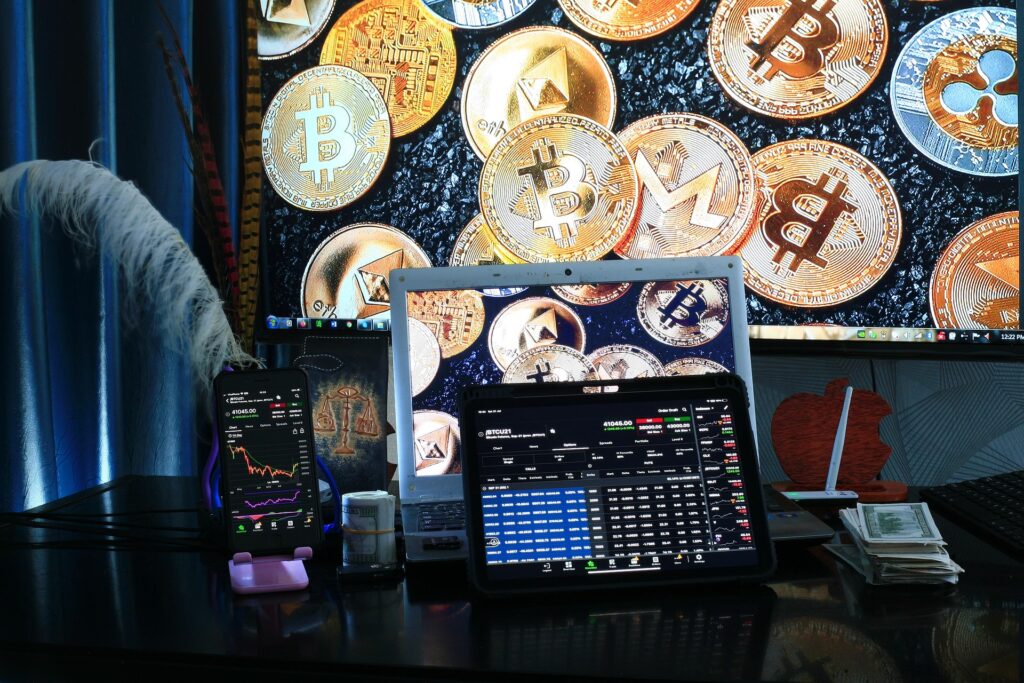
Trading is one of the most talked-about ways to make money in financial markets, but it\’s also one of the most misunderstood. Whether you\’re interested in stocks, cryptocurrencies, or other assets, this guide will help you understand the fundamentals, compare different trading styles, and highlight the most effective strategies.
Trading is everywhere online: screenshots of big wins, apps that make buying shares feel like a game, and courses promising financial freedom from a few hours in front of a chart. Before you put real money in, it helps to understand what trading actually is, how it differs from investing, and what the evidence says about who wins.
This article is general education, not personal investment advice. Trading and investing involve risk, including the loss of the money you put in.
What Is Trading?
Trading means buying and selling financial assets over short periods, from seconds to a few months, to profit from price movements. Investing means buying assets and holding them for years, to benefit from the growth of companies and the economy over time.
| Trading | Investing | |
|---|---|---|
| Time horizon | Seconds to months | Years to decades |
| Goal | Profit from short-term price moves | Grow wealth with the economy |
| Time needed | High: constant monitoring | Low: a few hours a year |
| Costs | Many transactions, spreads, fees | Few transactions, low ongoing costs |
| Typical result for private individuals | Most lose money over time | Historically positive over long periods, but not guaranteed |
What Can You Trade?
- Shares: part ownership of a company.
- ETFs: funds that hold many shares or bonds at once.
- Cryptocurrencies: highly volatile digital assets.
- Forex: currency pairs such as EUR/USD, usually traded with leverage.
- Commodities: gold, oil and others, often through derivatives.
- Derivatives (CFDs, options, certificates): products whose value depends on another asset, often with leverage that multiplies both gains and losses.
Types of Trading
- Day trading: opening and closing positions on the same day.
- Swing trading: holding positions for days or weeks.
- Position trading: holding for weeks or months based on bigger trends.
What the Evidence Says About Day Trading
The numbers are sobering. In the EU, providers of CFDs, one of the most popular trading products, must show a risk warning stating what percentage of their retail clients lose money. These warnings typically range between about 74% and 89%.
A well-known study of day traders in Brazil by Chague, De-Losso and Giovannetti found that of the people who kept day trading for more than 300 days, 97% lost money, and only around 1% earned more than the minimum wage from it.
Why is it so hard?
- Professional firms have faster technology, better data and lower costs
- Every trade has costs: spreads, fees and taxes
- Leverage turns small price moves into large losses
- Emotions (fear, greed, revenge trading) lead to poor decisions
- Short-term price movements are close to random
Investing: The Approach That Works for Most People
For most people, the more reliable way to benefit from markets is boring: invest regularly in a broadly diversified, low-cost ETF and hold it for many years. You don’t need to predict prices, and time does most of the work. See how compound interest works and how much money you need to start investing.
It also helps to understand ETF costs, regular investing (cost averaging) and how often to rebalance.
If You Still Want to Try Trading
Some people trade for interest or as a learning experience. If you do, protect yourself:
- Build your emergency fund and long-term investments first
- Only use money you can afford to lose completely, for example a small fixed share of your wealth
- Avoid leverage and products you don’t fully understand
- Keep a trading journal with every trade, cost and reason
- Set a maximum loss after which you stop
- Be very sceptical of anyone selling courses, signals or “guaranteed” strategies
How Trading Gains Are Taxed in Germany
Gains from shares, ETFs and most other financial products are subject to capital gains tax (Abgeltungsteuer) of 25% plus solidarity surcharge and, if applicable, church tax. Each person has a saver’s allowance (Sparerpauschbetrag) of €1,000 per year (€2,000 for jointly assessed couples). German banks usually deduct the tax automatically. Cryptocurrencies are treated differently, so check the current rules or ask a tax adviser.
Frequently Asked Questions
Is trading the same as investing?
No. Trading aims to profit from short-term price changes. Investing aims to grow wealth over many years by owning productive assets.
Can beginners make money trading?
Some do in the short term, often through luck. Over longer periods, studies show that the large majority of private day traders lose money.
How much money do I need to start investing?
Many brokers in Germany allow ETF savings plans from €1 to €25 a month. What matters more is starting and staying consistent.
Is day trading gambling?
It isn’t legally gambling, but for most private individuals the results look similar: high costs, unpredictable outcomes and a high chance of losing money.
Related Resources
- How Much Money Do You Need to Start Investing?
- How Does Compound Interest Work?
- ETF Expense Ratio Explained
- Dollar-Cost Averaging
- Why Boring Investors Win
My book on GumRoad: How Personal Finance Made Simple Can Transform Your Future
Or on Amazon:
Build Financial Clarity
Join the Crown Altessa newsletter and receive:
• the free Financial Foundation Guide
• practical financial frameworks
• strategic decision-making insights
• tools designed to help you think long term about money and stability
If you want calmer, more structured financial thinking in an uncertain world, subscribe below.