
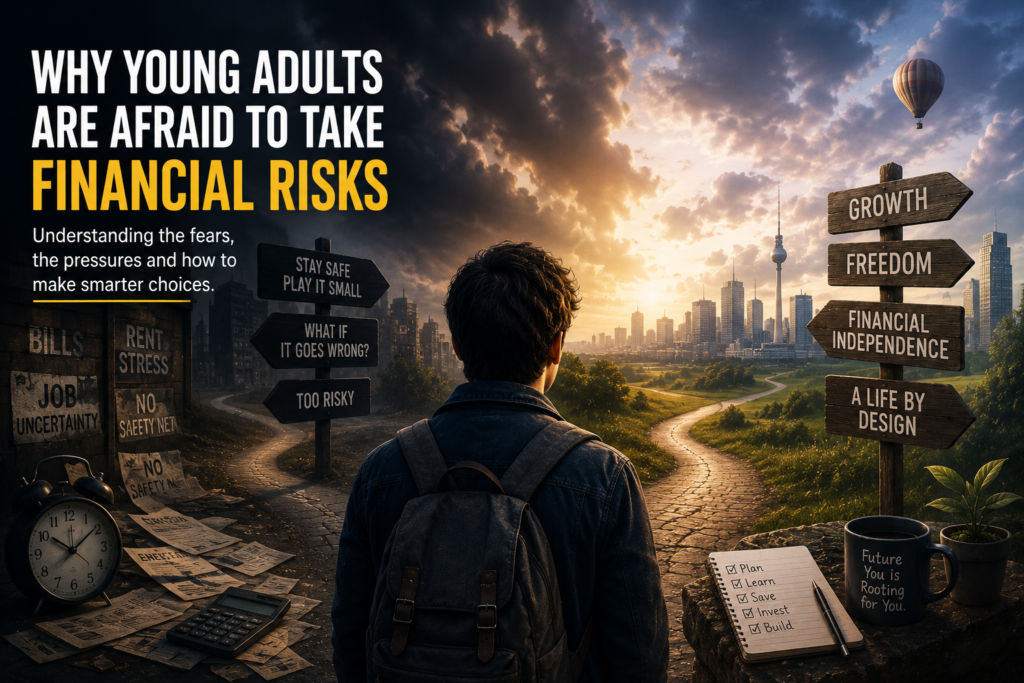
For many young adults in Germany and across Europe, financial decisions no longer feel straightforward.
Rising living costs, unstable jobs and frequent economic disruptions have made it harder to feel secure.
The idea of taking a risk — quitting a job, investing, starting a business — often feels less like an opportunity and more like a potential threat.
This article explores why financial risk feels so dangerous today, how economic and emotional factors intersect and how young people can evaluate risks more realistically.
Why Financial Risk Feels More Dangerous Today
Rising costs erode breathing room. Rent in large cities such as Berlin, Hamburg, Cologne and Munich has climbed significantly faster than many wages. Even workers earning around €2 500–€3 000 net monthly may still feel financially stretched after paying for housing, utilities, transportation and food. Inflation adds to this squeeze: the German Federal Statistical Office reported that consumer prices in May 2026 were 2.6 % higher than the previous year destatis.de. When essentials cost more, mistakes feel more expensive.
The job market feels fragile. Temporary contracts, frequent company restructurings and rapid technological change mean many industries no longer offer long-term security. Layoffs during economic downturns have affected service work, tech, logistics and even professional sectors. Without a stable baseline, many people feel they have less margin for error. Many employees start on probation periods or fixed‑term contracts, leaving them unsure how long their position will last. Many young workers feel financially trapped because these limited contracts make it hard to plan for the future or qualify for rental agreements.
Uncertainty clouds the future. Global crises, supply‑chain disruptions and geopolitical shocks remind people how quickly plans can change. Financial decisions that once seemed prudent now carry more unknowns. This background uncertainty makes it harder to commit to big moves.
The Fear Of One Expensive Mistake
Leaving a steady income or investing savings can feel like jumping without a safety net.
Quitting a job to retrain or move cities, starting a business, or putting money into stocks may theoretically lead to a better life — yet a single misstep could mean months of stress. In conversations with friends and colleagues, many young adults describe a fear that one expensive mistake could set them back years.
Changing careers or going back to university often requires upfront costs and foregone income. Moving to a new city can mean paying deposits, higher rent and leaving familiar networks. Investing for beginners can feel like gambling, especially during volatile markets. When each decision carries potential financial strain, hesitation is understandable.
Why Losing Stability Feels Worse Than Missing Opportunities
Many young adults are not avoiding opportunities because they lack ambition. They are protecting the stability they worked hard to build. Paying rent, covering rising grocery costs and coping with higher energy bills and transportation expenses can consume most of a paycheque. Fixed monthly obligations such as health insurance, mobile contracts and public transit passes leave little room for error. Losing a steady income or taking on a risky venture can jeopardize the fragile balance they have achieved.
For someone living in Berlin, Hamburg, Cologne or Munich, the fear of losing an affordable apartment — or spending months on waiting lists in a competitive rental market — makes it harder to pursue career changes or start a business. Rising energy bills and transportation costs further strain budgets. When you finally have consistent rent payments, a dependable salary and manageable living costs, giving up that stability can feel more frightening than missing out on a potential opportunity.
Many young adults also remain with family longer than they originally expected because independent living no longer feels financially realistic. Apartment shortages and soaring rents in major German cities mean it can take months to secure a flat. Sharing a home with parents offers financial relief, but it creates an emotional conflict between wanting freedom and needing security.
Sometimes the fear is not failure itself. It is the thought of having to rebuild everything from the beginning. Years of effort toward building savings, securing housing and establishing a career can be undone by a single misstep. The prospect of starting over — searching for a new job, finding affordable housing or paying off debts again — carries a heavy emotional weight that overshadows the potential rewards.
For some people, uncertainty eventually turns into decision paralysis, where even small long‑term choices begin feeling emotionally overwhelming. The more unknowns there are — contract lengths, probation periods, rent hikes — the harder it becomes to make a decision. Stagnation can then feel safer than taking any step at all.
In this environment, rising rent makes saving money impossible for some households, and young adults in Germany can’t save money when wages are eaten up by housing and other costs.
Why Many People Stay In Situations They Dislike
It is common to stay in a comfortable but unfulfilling job, to postpone relocating or to keep a business idea on the back burner.
Often this reluctance is not laziness but self‑preservation. With high fixed costs and little financial cushion, many people fear losing what little stability they have.
Economic uncertainty and job precarity also discourage mobility. Leaving a job voluntarily can jeopardize eligibility for unemployment benefits. Renting a new apartment may mean higher monthly costs or more difficult landlord requirements. These practical barriers make it rational for many to stay where they are, even if they are dissatisfied. For some, the hidden financial cost of loneliness — lacking a support network to share costs or provide advice — can make risk feel even more daunting.
How Social Media Distorts Risk
Platforms are filled with startup success stories, investing influencers and posts about achieving financial independence. These narratives can inspire, but they also skew perceptions. Survivorship bias means that people see the small percentage of entrepreneurs who succeed and rarely hear about the many who struggle or quietly close down. Investment influencers often share gains but gloss over losses.
Constant exposure to curated triumphs can make measured progress feel insufficient and feed the belief that big leaps are the only path to success. For readers who struggle with financial exhaustion or feel insecure about the future, the pressure to emulate these stories can amplify anxiety. Remember that most people achieve stability through steady effort rather than dramatic leaps.
The Difference Between Reckless Risk And Calculated Risk
Not all risks are equal. Reckless risks are impulsive and emotion‑driven: gambling large sums, jumping into complex investments without research or quitting a job with no plan. Such decisions often stem from frustration or a desire for quick change and can create long‑term harm.
Calculated risks involve planning and preparation. They require understanding potential downsides, building an emergency fund, reducing debt and gathering information. For example, someone considering leaving a job might first explore part‑time education or freelancing to test a new field. An aspiring entrepreneur could start a side project while working, learning from small experiments before committing fully. Investing small amounts and diversifying rather than trying to “get rich quick” reduces the chance of ruin and allows learning from mistakes.
In short, risk can be a tool for growth when approached thoughtfully. It becomes dangerous when fuelled by desperation or unrealistic expectations.
Signs Fear Is Holding You Back
Financial caution can be prudent, but excessive risk aversion may limit growth. Signs that fear might be dictating your choices include:
- Overthinking decisions and constantly delaying action
- Avoiding opportunities such as promotions, freelance work or further education
- Staying in a job you dislike purely for security
- Feeling paralyzed by the idea of investing or saving differently
- Waiting for the “perfect time” to start anything
- Having an excessive need for certainty before making even small changes
You may also feel financially behind when you measure your achievements against friends, colleagues or older generations; this perception can deepen fear and inaction.
Recognizing these patterns is the first step toward more balanced decision‑making.
How To Evaluate Risk More Realistically
Young adults can’t eliminate uncertainty, but they can make it more manageable. Practical steps include:
- Build an emergency fund. Saving three to six months’ living expenses provides a buffer if plans don’t work out.
- Reduce high‑interest debt. Paying down expensive loans reduces monthly obligations and increases flexibility.
- Develop in‑demand skills. Continuous learning makes it easier to switch jobs or negotiate better pay. Side projects and certifications can signal competence without major commitments.
- Research opportunities carefully. Understand the industry, market trends and personal fit before investing time or money.
- Test ideas gradually. Start a business as a side project or invest small amounts to learn how markets behave. Gradual transitions allow mistakes without catastrophe.
- Seek advice, but filter noise. Talk to mentors or financial professionals, but be wary of one‑size‑fits‑all advice from social media.
These steps can turn vague anxiety into concrete action. They also help you become financially stable before taking larger leaps.
Why Small Risks Often Matter More Than Big Risks
Progress often starts with modest steps rather than dramatic leaps. Learning a new skill, applying for a position that stretches your abilities, networking with people in a desired industry, or requesting a pay raise are manageable challenges that build confidence and resilience.
Starting a side project can reveal whether a business idea is viable without jeopardizing your livelihood. Opening a small investment account and contributing modest amounts can demystify markets. These small risks teach you about your tolerance, help you recover quickly if things go wrong and gradually build financial literacy.
When combined over time, these incremental moves often lead to the bigger transitions you once feared. This gradual approach echoes the theme of delaying major life decisions, where people learn that steady progress often matters more than sudden transformations.
Frequently Asked Questions
Why are young adults afraid of financial risk?
Economic instability, rising living costs, unstable jobs and the emotional weight of potential failure make risk feel dangerous. Many feel they have little room for mistakes, so even small losses can feel catastrophic.
Is fear of investing normal?
Yes. Investing exposes people to volatility and the possibility of loss. Beginners can start small, diversify and focus on long‑term goals to reduce anxiety.
How do I know if a risk is worth taking?
Assess the potential upside and downside. Consider your emergency savings, job security and personal goals. If the worst‑case scenario is manageable and the potential upside aligns with your values, the risk may be worth considering.
What is the difference between risk and recklessness?
Risk involves uncertainty but can be managed through planning, research and gradual action. Recklessness ignores preparation and relies on hope or emotion.
How can I become more financially confident?
Build knowledge through reading and courses, develop budgeting and saving habits, seek guidance from trusted professionals and learn from small experiments. Confidence grows when you understand your finances and see steady progress.
Conclusion
Many young adults feel that uncertainty is no longer the exception but the rule. Inflation and high living costs reduce safety nets, while job insecurity and global volatility make decision‑making emotionally charged.
However, risk does not have to be reckless. Thoughtful, gradual steps—building reserves, upgrading skills, testing ideas—can turn fear into measured confidence.
Modern financial pressure may make bold moves intimidating, but small, deliberate actions can create momentum. Over time, these choices build resilience and offer a more sustainable way to grow, even when the future feels unpredictable.
My book on Gumroad:
https://ukandu0.gumroad.com/l/bteyh
Or on Amazon:
Build Financial Clarity
Join the Crown Altessa newsletter and receive:
• the free Financial Foundation Guide
• practical financial frameworks
• strategic decision-making insights
• tools designed to help you think long term about money and stability
If you want calmer, more structured financial thinking in an uncertain world, subscribe below.