
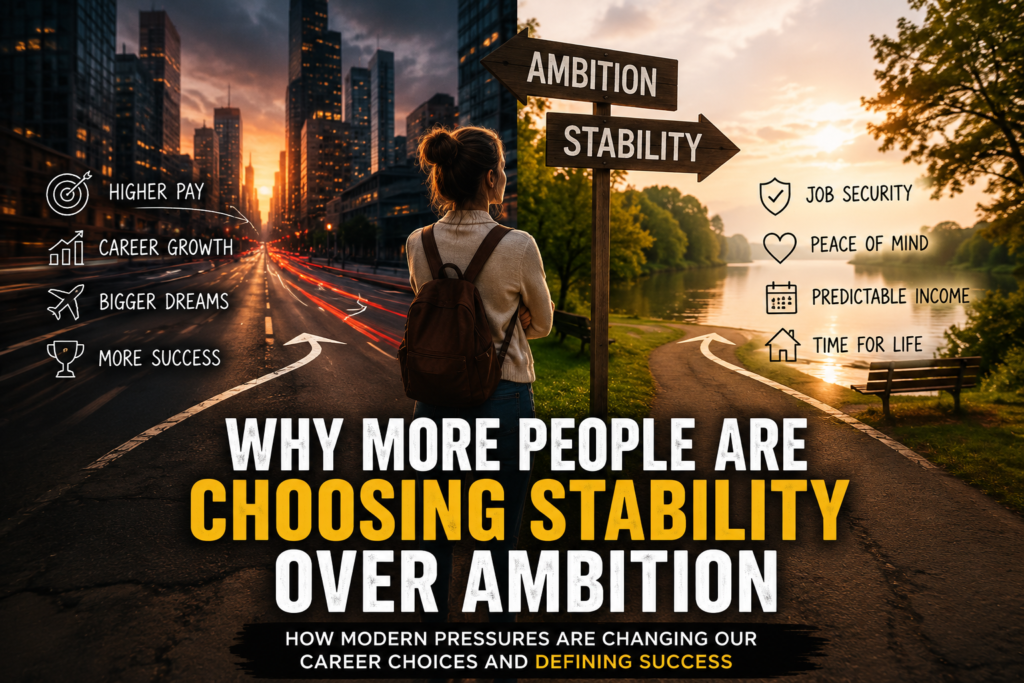
For decades, success stories were about climbing ladders, seizing opportunities and expanding wealth. Today, more people are quietly choosing something else: stability. Rising living costs, fragile work contracts and relentless news about economic volatility have made the pursuit of security feel more valuable than ever. This article explores why choosing stability over ambition is becoming common, how modern pressures influence our choices and why this shift doesn’t necessarily mean giving up on growth.
How Success Used To Be Defined
Traditional success often revolved around constant upward movement: earning promotions, securing bigger salaries, buying a home and continually climbing the career ladder. In post‑war Germany and much of Europe, this trajectory seemed achievable for many. Higher education led to secure jobs; mortgages led to home ownership; pay raises kept up with living costs. Social norms rewarded ambition and risk‑taking. For our parents and grandparents, building a life meant working hard and expecting that effort to translate into tangible growth.
But the definition of success is changing. Skyrocketing property prices in Berlin, Hamburg, Cologne and Munich make home ownership feel like a distant dream. As costs rise faster than wages, the idea that constant growth is the only path to success is losing its appeal.
Why Stability Has Become More Valuable
Economic pressures
Inflation and energy costs continue to rise, steadily eroding purchasing power. Rents and utility bills have climbed year after year, leaving less for discretionary spending. Financial services note that German households now devote a substantial share of their income to housing and energy, while food prices also eat into what little remains. In cities such as Berlin, Munich, Cologne and Hamburg, high living costs swallow a large portion of take‑home pay. When essential expenses consume most of your budget, the idea of risking a stable job for a potential promotion or starting a business feels far less appealing.
Job insecurity
Modern work often comes with probation periods and fixed‑term contracts. During the COVID‑19 pandemic, researchers found that young workers were more likely to be on temporary contracts and less likely to receive short‑time work allowances than older colleagues. Their incomes also developed less favourably. This insecurity persists: many employers offer six‑ or twelve‑month contracts that may or may not be renewed. Facing such uncertainty, employees prioritise reliable pay and benefits over risky jumps. The cost of losing a job—especially in a competitive rental market—can be devastating. This combination leaves many young workers feeling financially trapped, stuck between rising costs and insecure jobs.
Housing uncertainty
In urban Germany, finding affordable housing can take months. Long waiting lists and high deposits discourage people from relocating for better roles. Someone living in Munich or Hamburg may turn down an ambitious opportunity if it means losing a rent‑controlled apartment. Stability often means keeping a roof over your head without the constant stress of moving or renegotiating leases.
Why Ambition Feels Riskier Today
Ambition itself hasn’t disappeared. Many people still dream of starting businesses, switching careers or investing. What has changed is their awareness of risk. Cooling labour markets and an uncertain economy have given rise to phenomena like “job hugging”: surveys show that a large share of employees plan to remain in their current roles because of fear and economic uncertainty. Choosing to stay put isn’t laziness; it’s risk management.
Pursuing a new role or freelancing means navigating probation periods, inconsistent income and lack of benefits. Investing has become more accessible, but market volatility and inflation can quickly erode gains. Relocating to another city or country brings visa issues, higher living costs and social disruption. Ambition feels riskier when the potential downsides could threaten the stability people have worked hard to build.
Why Failure Feels More Expensive Today
Trying something new has always involved risk, but today the cost of failure can feel crushing. Losing a stable income might mean dipping into savings to pay rent or energy bills, and finding a comparable job quickly is far from guaranteed. For renters in cities like Berlin or Hamburg, a missed paycheque can lead to eviction or the loss of a long‑held apartment in a tight housing market. Entrepreneurs or freelancers may worry that a slow month will erode emergency funds they painstakingly built up.
Many people realise that ambition is not frightening because of failure itself. It is frightening because recovering from failure now feels more difficult. Rebuilding savings or restoring housing stability after a setback can take years when living costs and job markets are unforgiving. Sometimes the fear is not the event of failure itself. It is the thought of losing years of progress and having to start over. The emotional burden of risking financial risk can be heavier than the prospect of hard work.
The Emotional Appeal Of Stability
The appeal of stability is more than financial. It’s about peace of mind. Predictable income, a routine that allows for evenings off and the ability to plan months ahead create a sense of emotional safety. When rent, groceries and energy bills always seem to rise, knowing exactly when your salary arrives becomes a source of comfort. Having a stable job with benefits—rather than a series of freelance gigs—can reduce anxiety about unexpected expenses.
Lower stress also allows people to enjoy their lives outside of work. A stable role can leave room for hobbies, relationships and health. While some might argue that this means career ambition is dying, the reality is more nuanced. Many people are not chasing less from life. They are simply trying to protect what they have already built. Over the years they have assembled emergency funds, nurtured careers, invested in relationships and secured housing. They have built routines that support their health and happiness. Guarding these achievements feels more important than constantly seeking the next level. Stability isn’t about complacency; it’s about valuing peace of mind as much as prestige.
When Peace Of Mind Becomes The Real Goal
As life grows more expensive and unpredictable, the ability to sleep soundly becomes a luxury. Lower stress, predictable schedules and a sense of emotional stability start to outweigh the allure of a bigger title or paycheque. Many people willingly trade a larger salary or more prestigious role for a job that offers more free time, flexible hours and a calmer daily rhythm. Having evenings and weekends free, knowing you can pay bills without anxiety and waking up without dread about work become markers of success in their own right.
At a certain point, peace of mind becomes more valuable than constant achievement. Predictability and balance allow you to invest in relationships, hobbies and health. Those who have spent years hustling through uncertainty often find profound relief in a routine that lets them plan ahead and enjoy daily life. In this sense, prioritising peace of mind is not giving up on goals; it is redefining what a good life feels like.
When Burnout Changes Your Priorities
Years of hustle culture—encouraging people to work long hours, monetise hobbies and constantly improve—have led to widespread burnout. Emotional exhaustion seeps in when every hour is filled with productivity. Always striving can leave people financially exhausted and too drained to enjoy the fruits of their labour. In this state, lavish goals like rapid career advancement or entrepreneurship may lose their appeal. Many begin to prioritise work‑life balance, rest and mental health over constant achievement. They may choose jobs with fewer hours or less responsibility to preserve their well‑being, or step back from side hustles to make room for family and personal interests.
Burnout often changes not only how much people work, but also what they believe success should look like. After reaching a breaking point, some realise that success is not about working every waking moment—it’s about having energy to enjoy life. The desire for a slower pace is not laziness but self‑protection. As more people experience this shift, choosing stability over ambition becomes an act of reclaiming health and happiness.
Why Social Media Creates Unrealistic Expectations
Platforms are filled with highlight reels of entrepreneur culture, luxury lifestyles and success stories. Scrolling through social feeds, you might see peers who seem to earn more, travel constantly or buy property at a young age. Survivorship bias hides the many who try and fail. This constant comparison fosters a sense of future insecurity. People feel pressure to replicate curated successes but also fear the risk of failure. The result is paralysis: ambition seems both necessary to keep up and too risky to pursue.
Signs Stability Has Become Your Priority
How do you know if stability has eclipsed ambition? Consider the following:
- Valuing predictable income. You’d rather have a steady salary than a commission‑based or freelance income, even if the latter could be higher.
- Preferring long‑term security. You choose a permanent contract or government job over a start‑up role with potential stock options.
- Prioritising mental health. You are willing to forego promotion opportunities or raises if they require longer hours or higher stress.
- Avoiding unnecessary risk. You think twice about relocating, switching industries or starting a business if it means giving up a stable life.
- Focusing on resilience. You build an emergency fund and diversify income streams, emphasising financial resilience over quick wins.
If these behaviours resonate, stability might be more important to you than pursuing ambitious goals at any cost.
Can You Choose Stability And Still Be Ambitious?
Stability and ambition are not mutually exclusive. You can maintain a stable job while pursuing new skills, seeking promotions or investing gradually. Many companies offer internal mobility programmes, so you can explore different roles without leaving your employer. Investing small amounts or starting a side project after work can satisfy your entrepreneurial drive while preserving a steady income. Building financial resilience through savings and diversification lets you take bigger risks later. Gradual growth may not be as flashy as a dramatic leap, but it can lead to sustainable success.
The Ambition Trap: Why Success Looks Different Today
Ambition used to be measured by external markers: becoming wealthy, climbing the corporate ladder, buying a larger home and gaining status. Those goals once symbolised security and respect. But as society has changed, so have our ideas of what makes a fulfilling life. Modern ambition is not necessarily smaller—it is simply different. Flexibility, resilience, financial confidence, time freedom and healthier lifestyles have become new indicators of success.
This shift does not mean people are becoming less ambitious. Instead, many are redefining what success means. Earning enough to feel secure, having the freedom to take a walk in the middle of the day, or maintaining a work‑life balance that supports mental health can be just as ambitious as seeking a corner office. The ambition trap is the idea that there is only one way to prove yourself. Letting go of that narrow definition opens space for personal goals that align with your values and well‑being.
Why Modern Success Looks Different For Many People
Modern definitions of success are evolving. Flexibility, resilience and peace of mind are becoming just as important as title and salary. For many, success means being able to adapt to economic shifts without panic; it means having enough savings and stability to make choices without fear. It’s about cultivating financial confidence and living a sustainable lifestyle rather than chasing constant growth. In this view, delaying major life decisions or changing course isn’t failure—it’s strategic patience. Being ambitious can coexist with being cautious; the two concepts are no longer seen as opposites.
Frequently Asked Questions
Is it okay to choose stability over ambition?
Yes. Prioritising stability is a valid response to modern economic pressures. It doesn’t mean you lack ambition; it means you value security and peace of mind. Many people choose stability temporarily while planning for future opportunities.
Why do I feel less ambitious than before?
Economic uncertainty, job insecurity and burnout can reduce the appeal of risky moves. Feeling less ambitious may simply mean you’re becoming more risk‑aware and valuing stability.
Does choosing stability mean giving up?
No. Choosing stability can be a strategic choice. It allows you to build resources, develop skills and prepare for future opportunities. It does not preclude growth or change.
Can I still grow professionally while prioritising security?
Absolutely. You can pursue training, mentorship and internal promotions within a stable job. You can start small side projects or invest gradually. Growth doesn’t always require large leaps.
Why are so many people prioritising stability today?
Rising costs, job insecurity and social pressures have made risk feel more dangerous. People want to protect their well‑being and the stability they’ve built. Survey data shows many workers intend to stay in their current roles due to fear and economic uncertainty.
Conclusion
Choosing stability over ambition is not a sign of weakness but a rational response to modern realities. As living costs climb and work becomes less secure, prioritising financial security and mental health makes sense. Yet stability and ambition can coexist. By growing gradually, investing thoughtfully and focusing on resilience, you can build a life that balances security with personal fulfilment. Success today looks different: it’s about long‑term thinking, sustainable choices and the confidence to define your own path.
My book on Gumroad:
https://ukandu0.gumroad.com/l/bteyh
Or on Amazon:
Build Financial Clarity
Join the Crown Altessa newsletter and receive:
• the free Financial Foundation Guide
• practical financial frameworks
• strategic decision-making insights
• tools designed to help you think long term about money and stability
If you want calmer, more structured financial thinking in an uncertain world, subscribe below.