
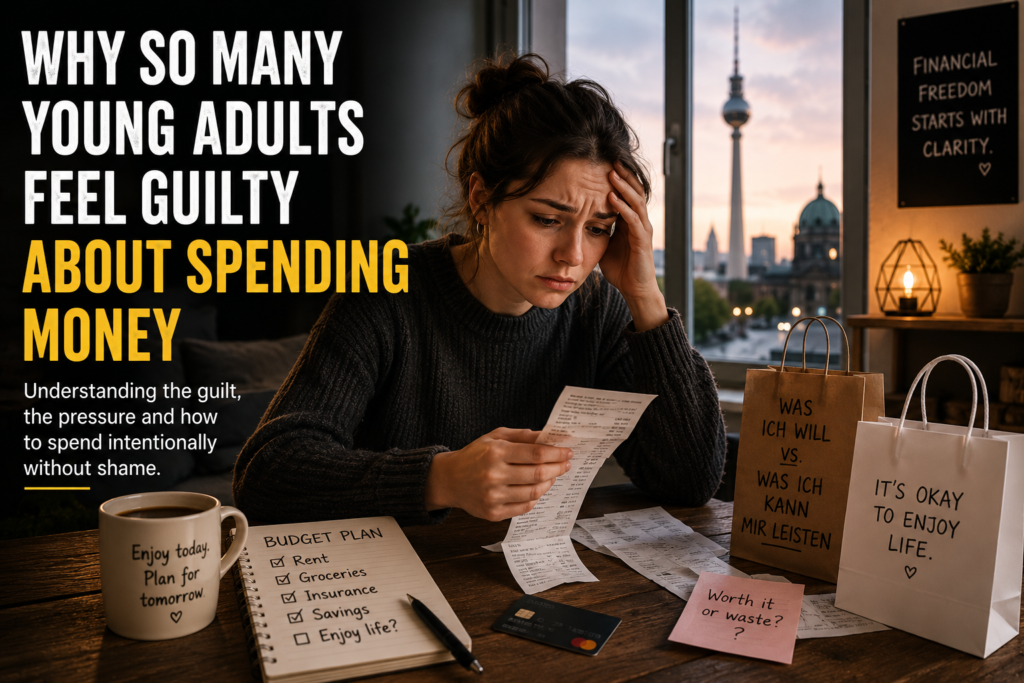
For many young adults in Germany, money is a source of both freedom and worry.
Rising prices, unstable work contracts and relentless economic headlines have made even small purchases feel consequential.
Feeling guilty about spending money is no longer just a quirk; it has become a common emotional response to modern financial pressure.
In this article we explore why spending guilt is increasingly common, how it intertwines with economic realities and personal history, and what practical steps can help people spend with intention and without shame.
Why Spending Money Feels Different Today
Rising costs and shrinking breathing room
Inflation remains elevated and energy costs continue to climb, making daily expenses noticeably more expensive. Instead of focusing on exact numbers, it’s more important to recognise that housing and energy now take up a large share of many budgets, while food and drink have also become significantly more costly. Rents in cities like Berlin, Munich, Cologne and Hamburg have surged over the years, and utilities, transportation and everyday items have followed suit. With wages often failing to keep pace, many young adults feel that every purchase now competes with their sense of long‑term security.
These pressures make everyday spending feel heavier. When essential bills absorb most of your income, buying a coffee or a new pair of shoes feels like a risk to your financial buffer. Many young adults worry that one unplanned purchase could derail their saving money goals.
The impact of job insecurity
Modern work also contributes to spending guilt. Many entry‑level positions in Germany start on probation periods or fixed‑term contracts, leaving employees unsure about long‑term income. In big cities with competitive rental markets and waiting lists for apartments, securing a lease often requires proof of a stable job and a large deposit.
When your contract ends in six or twelve months and you know it could take months to find an affordable flat in Berlin or Munich, it’s natural to hold your wallet tighter. Financial decisions are made with the fear of losing that precarious stability.
This backdrop of economic uncertainty makes even modest pleasures — a trip to visit friends in Hamburg or a meal out in Cologne — feel indulgent.
The Emotional Side Of Spending Guilt
Anxiety and second‑guessing
Spending guilt isn’t just about numbers; it’s about feelings.
The Budget Mom blog describes spending guilt as rooted in emotions, beliefs and past experiences. People who grew up in households where money was tight may associate spending with danger or shame. Internalised rules such as “only spend on needs, not wants” or “save every penny” can become rigid and toxic. When you buy a new jacket, book a weekend trip or order takeout after a long week, you might feel anxious or irresponsible even when the purchase is well within your budget.
Fear of setbacks and irresponsibility
Young adults often worry that a single purchase will unravel their progress. A dinner out with friends might leave a dent in your monthly budget; upgrading a phone can feel like a major expense. With rising costs and news stories about economic headwinds, these outlays can feel like leaps rather than steps. People ask themselves: “What if I need that money later? Am I being irresponsible?” This fear is compounded by a sense that they are already feeling financially behind compared with older generations or their peers.
Everyday examples
Imagine finally upgrading your old laptop, planning a holiday or joining a gym in Cologne. Instead of feeling excited, you spend the evening revisiting your bank balance and questioning the decision. You might return the item or cancel the trip, not because you can’t afford it, but because the internal voice telling you to be careful is too loud. This is the lived experience of money anxiety — a constant negotiation between freedom and fear.
Why Spending Money Can Feel Emotionally Unsafe
For many young people, money represents not just purchasing power but a sense of security. Saving for emergencies or future plans becomes a psychological anchor; spending from that reserve feels like chipping away at a safety net. When news about layoffs or economic downturns is constant, it’s easy to imagine losing your job or facing an unexpected medical bill. Even the idea of a broken boiler or car repair can create a mental scenario where your future self needs every euro you spend today. Sometimes spending guilt has less to do with the item being purchased and more to do with the fear of needing that money in the future.
What seems like a small purchase can feel like a financial risk because you fear it undermines your safety net. A modest dinner or a short holiday may be within your budget, but your mind might be running through a list of “what ifs”: What if my landlord raises the rent? What if my probation period isn’t extended? What if energy bills spike this winter? Money becomes a buffer between you and future insecurity, so letting it go — even temporarily — triggers anxiety. Recognising this helps you see that the guilt comes from your desire to protect yourself, not from the purchase itself.
Why Childhood Money Lessons Stay With Us
The way we feel about spending often traces back to our earliest memories of money. Many of us grew up hearing phrases like “Money doesn’t grow on trees,” “We can’t afford that,” or “Save your money,” whispered at supermarket checkouts or shouted during bill‑paying arguments. When parents worried about bills or turned down small treats, children learned to associate spending with tension. Even positive lessons like “save for a rainy day” can morph into rigid rules that feel wrong to break.
These scripts linger into adulthood. Someone who watched their family struggle may now find it hard to enjoy a simple purchase without hearing an inner critic. Even if your own finances are stable, that childhood voice may ask why you’re buying lunch out when a cheaper option exists. Recognising that your feelings around money were shaped long ago can help you untangle present‑day guilt from past fears.
Why Even Responsible People Feel Guilty
One of the most confusing aspects of spending guilt is that it affects people who manage their finances responsibly. Many young adults budget carefully, track their expenses and save consistently, yet still feel uneasy when spending on themselves.
It’s also common to meet people who have healthy savings accounts and a sensible budget yet still feel a pang of regret after buying something they want. They can comfortably afford a purchase and still spend hours questioning whether they should have made it. This guilt often has little to do with the price tag and more to do with an internal standard they feel obligated to meet. It reflects the tension between being responsible and allowing yourself to enjoy what you’ve worked hard to earn.
According to behavioral economists at Fidelity, money emotions are often formed in childhood. Our parents’ attitudes towards money — whether they hoarded, splurged or never discussed it — shape our mental models. Guilt arises when our actions diverge from these deeply held beliefs. If you grew up hearing “You should only spend money on important things”, you may feel guilty buying flowers or booking a city trip. Psychologists say this guilt isn’t necessarily a sign that you’ve done something wrong; it’s an indicator that there is a difference between what you believe and what you are doing. In other words, even when you budget and save, your inner script may still warn you against “unnecessary” spending.
Fear of Losing Progress
For many young adults, financial stability doesn’t come easily. Building an emergency fund or paying off debt can take years of discipline, especially in an economy where wages barely keep up with costs. Once you finally see your savings grow, the thought of watching that balance go down can feel unbearable. Sometimes the guilt comes from how hard it was to build financial stability in the first place. A modest dinner or a last‑minute trip isn’t just money spent — it feels like undoing progress that took months to achieve.
This fear can make spending seem dangerous even when it’s planned. People worry that dipping into savings will start a slippery slope back to living paycheck to paycheck. Recognising this fear can help you set boundaries: plan for spending within your budget, acknowledge your past efforts and remember that one thoughtful purchase does not erase your progress.
The Influence Of Social Media And Financial Advice
Social media feeds our guilt in subtle ways. Our timelines are filled with two conflicting messages: hustle and frugality on one side, and lavish lifestyles on the other. Influencers promote investing strategies, side‑hustle culture and early retirement plans. Others showcase luxury holidays, designer wardrobes and constant upgrades.
Constant exposure to these extremes can make us feel like we’re financially exhausted — hustling to save and invest while also being told that spending on ourselves is frivolous. We see friends buying homes and going on expensive trips while we’re trying to build an emergency fund. This comparison culture leaves many feeling inadequate and triggers guilt when spending on anything perceived as “non‑essential”.
Well‑intended financial advice can also add pressure. Generic guidelines like “live below your means” or “every euro spent on coffee could be a retirement contribution” are helpful in moderation, but when repeated constantly they can make someone who already feels future insecurity believe that any spending is irresponsible. Balancing financial education with emotional well‑being is crucial.
When Frugality Becomes Stressful
Saving and budgeting are important, but there is a point where caution turns into stress. Excessive saving can lead to decision fatigue, where each purchase feels like a major judgement call. People might avoid replacing worn‑out shoes or skip meals out entirely, even when they can afford them. They might cut back on heating in winter or decline social invitations to save a few euros.
Over time, this relentless frugality can reduce quality of life and lead to burnout. In the long run, denying yourself all comfort can make you resent your financial plan, causing you to splurge impulsively or give up altogether. Achieving a financially stable life often requires balance: saving for the future while allowing yourself to enjoy the present.
Signs Spending Guilt May Be Becoming Unhealthy
It’s one thing to be mindful; it’s another to let guilt rule your decisions. Here are some signs that spending guilt may be unhelpful:
- Anxiety after every purchase. If you feel a wave of worry after buying groceries or paying for a coffee, even when these expenses are planned and affordable, guilt may be taking over.
- Avoiding all leisure spending. Saying no to every restaurant, movie or small trip because you feel undeserving or irresponsible.
- Obsessively checking accounts. Constantly refreshing your banking apps and spreadsheets to reassure yourself that you’re not overspending.
- Cancelling affordable activities. Skipping plans with friends or family because of perceived financial guilt, even though the cost fits within your budget.
- Feeling guilty after planned purchases. Experiencing shame or regret even after you’ve budgeted for and consciously decided to spend on something meaningful.
If these behaviours sound familiar, it may be time to rethink your relationship with money and seek a healthier balance.
How To Spend Money Without Feeling Guilty
Spending guilt often fades when spending becomes intentional rather than impulsive. Here are some strategies:
- Budget for joy. Give your money a job. The Budget Mom recommends creating “sinking funds” for fun: a monthly set‑aside for travel, hobbies or small luxuries. By earmarking money for enjoyment, you remove uncertainty and give yourself permission to spend without guilt.
- Know your values. Understanding what truly matters to you helps distinguish between purchases that align with your priorities and those that don’t. A movie night with friends might bring more joy than another random gadget.
- Distinguish needs and wants. Needs such as rent, food and transportation should be covered first. Once essentials and savings are handled, spending on wants can be more guilt‑free.
- Plan significant purchases. Give yourself time to research and reflect before making bigger decisions. When you buy with intention, you’re less likely to second‑guess.
- Practice kindness. Psychologists at Fidelity suggest reframing guilt as a prompt for reflection rather than punishment. When you feel guilty, pause and ask whether the purchase conflicts with your long‑term goals or simply with old beliefs. That awareness can help you make decisions that honour both your future and your present.
Why Enjoying Money Is Part Of Financial Health
Financial well‑being isn’t just about the size of your savings. It’s also about your ability to use money as a tool to support your life. Enjoying some of your earnings can actually make your long‑term plan more sustainable.
Small, planned treats can reduce the urge to binge spend later. They can also help you stay motivated to stick with your budget. Living entirely for the future can lead to burnout and resentment. People who delay all gratification often report feeling disconnected from their goals and delaying major life decisions because their plans never feel “perfect”.
Recognising that a balanced approach — saving for the future while allowing yourself to enjoy the present — is healthier than swinging between extremes. A strong money mindset includes the belief that you deserve comfort and joy as well as security.
Financial health is not only about protecting your future. It is also about allowing yourself to enjoy your present. Denying yourself all enjoyment can lead to resentment and may ultimately sabotage your savings plan. Incorporating small, positive experiences into your budget — whether it’s a coffee with a friend, a creative class or a weekend away — provides emotional rest and motivation. These moments can renew your energy to continue saving and investing for bigger goals. They also help you remember why you’re working so hard in the first place. Without them, the pursuit of security can feel hollow, causing you to delay plans or lose sight of what a financially stable life truly means. A sustainable money mindset balances responsibility with joy, avoiding burnout and fostering resilience.
Frequently Asked Questions
Why do I feel guilty spending money?
Spending guilt often stems from a combination of external pressures and internal beliefs. Rising living costs and economic uncertainty make purchases feel riskier. Childhood experiences, family attitudes and cultural messages about money also shape how you view spending.
Is spending guilt normal?
Yes. Many financially responsible people experience guilt or anxiety when spending, even when their budgets are sound. Guilt is an emotional signal that there may be a mismatch between your behaviour and your beliefs. Recognising it as such can help you reflect rather than punish yourself.
How can I stop feeling guilty after purchases?
Plan your spending, align purchases with your values and budget for enjoyment. When guilt arises, pause to consider whether the purchase truly jeopardises your financial stability. If it fits your plan, remind yourself that money is a tool to support your life.
Can saving too much become unhealthy?
Yes. Extreme frugality can lead to stress, decision fatigue and reduced quality of life. Denying yourself every pleasure can cause burnout or eventual overspending. A sustainable plan includes both saving and conscious, joyful spending.
What is healthy spending?
Healthy spending is intentional. It covers essential needs, supports long‑term goals and allocates resources for things that enrich your life. It involves conscious choices rather than impulsive or guilt‑driven actions.
Conclusion
Spending guilt is a natural response to a world where costs are rising, job security is uncertain and financial advice is everywhere. But guilt doesn’t have to dictate your relationship with money.
By understanding the economic pressures at play and recognising the emotional scripts you’ve inherited, you can start spending with intention rather than fear.
Balancing saving and enjoyment, reflecting on your values and planning your purchases can help transform guilt into confidence.
Ultimately, financial health isn’t just about building wealth; it’s about living a life that feels secure, sustainable and fulfilling.
My book on Gumroad:
https://ukandu0.gumroad.com/l/bteyh
Or on Amazon:
Build Financial Clarity
Join the Crown Altessa newsletter and receive:
• the free Financial Foundation Guide
• practical financial frameworks
• strategic decision-making insights
• tools designed to help you think long term about money and stability
If you want calmer, more structured financial thinking in an uncertain world, subscribe below.