
Introduction
You finally start earning more money… but nothing really changes.
Your salary increases, yet your savings don’t. At the end of the month, you’re still wondering where your money went.
If this sounds familiar, you’re not alone.
This is exactly why people stay broke—not because they don’t earn enough, but because certain patterns keep repeating. In this article, you’ll understand what causes it, how it happens in real life, and how to fix it.
Why Income Alone Doesn’t Create Wealth
Many people believe earning more money will solve everything.
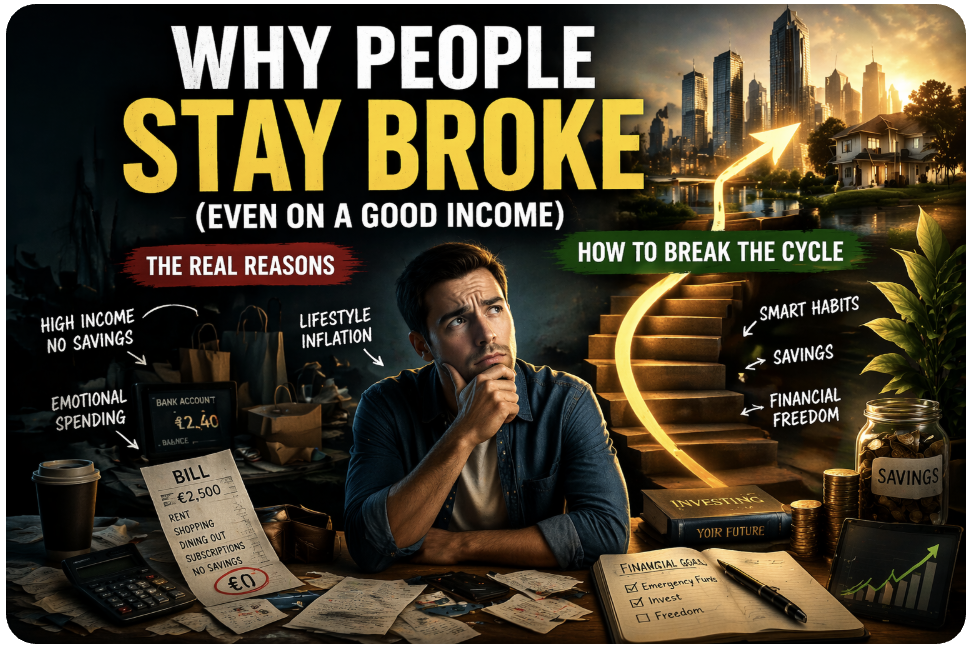
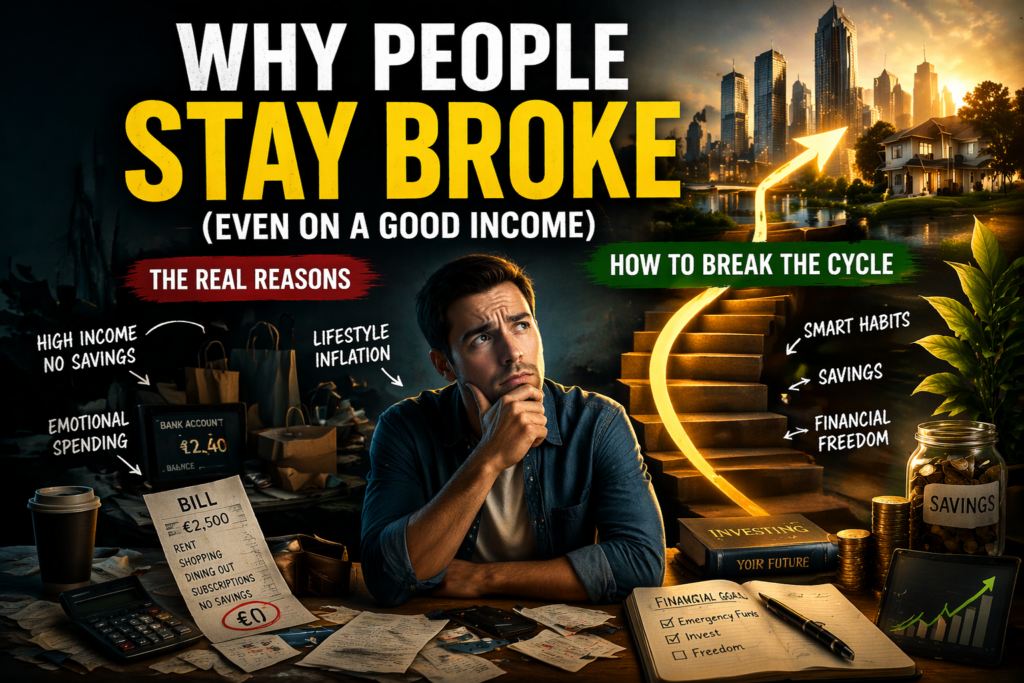
In reality, higher income often leads to higher spending—a pattern known as lifestyle inflation. This is when your expenses increase every time your income increases.
For example:
- Earn €2,000 → spend €1,900 → save €100
- Earn €4,000 → spend €3,900 → still save €100
Nothing changes.
Wealth is not built by income—it’s built by what you keep and how you use it.
The Hidden Behaviors That Keep People Broke
Most people don’t stay broke because of bad luck. It’s usually a combination of habits.
Short-Term Thinking
Spending decisions are often based on what feels good now.
Upgrading your lifestyle, buying things to reward yourself, or avoiding discomfort may feel justified—but it delays progress.
Lack of Systems
Without a system, money disappears.
If you don’t track where your money goes, you’re guessing. And guessing leads to mistakes.
If you’re unsure where to start, this step-by-step expense tracking guide can help you see exactly where your money is going.
Emotional Spending
Money decisions are often emotional, not logical.
Stress, boredom, or social pressure can trigger spending.
Small decisions like “just this once” slowly add up.
Over time, these habits explain why people stay broke, even when they earn enough.
A Simple Example: Same Income, Different Outcome
Let’s look at two people earning €2,500 per month.
Person A:
- Tracks expenses
- Saves €300 monthly
- Follows a simple plan
After one year:
→ €3,600 saved (plus potential investment growth)
Person B:
- Doesn’t track spending
- Spends most of their income
- Upgrades lifestyle regularly
After one year:
→ €0 saved
Same income. Completely different result.
The difference isn’t money—it’s behavior.
The Difference Between Thinking Poor vs Thinking Wealthy
This isn’t about judging people. It’s about patterns.
People who struggle financially often:
- spend first, save later
- react emotionally
- focus on short-term comfort
People who build wealth:
- save and invest first
- think long-term
- make intentional decisions
The key difference? Awareness and control.
How Identity Shapes Financial Decisions
Your financial life reflects how you see yourself.
If you think:
- “I’m bad with money”
- “I’ll always struggle”
You’ll act in ways that reinforce it.
But when you start thinking:
- “I manage my money well”
- “I’m building something long-term”
Your decisions begin to change.
If you’ve tried before and failed, that’s normal. The goal isn’t perfection—it’s consistency.
How to Break the Cycle
You don’t need a complex system. You need a simple one you can follow.
1. Know your numbers
Understand your income and expenses clearly.
2. Build a simple budget
Use a structure you can stick to.
This guide on how to create a budget that works can help you get started.
3. Create a savings plan
Don’t leave saving to chance.
A clear system like this savings plan guide helps you stay consistent.
4. Automate your finances
Set automatic transfers right after payday.
5. Delay lifestyle upgrades
Just because you earn more doesn’t mean you should spend more.
What This Means for Your Future
Understanding why people stay broke changes everything.
Because it shows you this:
It’s not about how much you earn—it’s about the patterns you follow.
When you change how you think, plan, and act with money, your results start to change too.
You don’t need a perfect system.
You need one you won’t abandon.
And once your habits change, your financial future follows.
My book: How Personal Finance Made Simple Can Transform Your Future