
Introduction
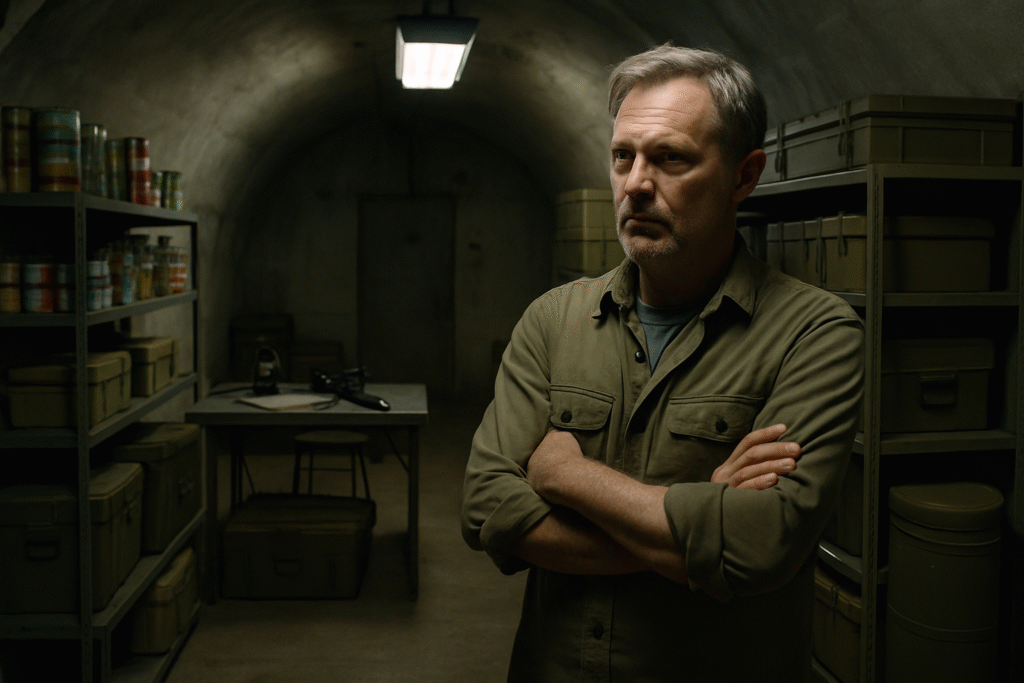
The global surge of uncertainty has spawned a curious trend among certain newly wealthy individuals: building private bunkers. From repurposed missile silos in the American Midwest to hidden complexes carved into European hillsides, a bunker seems to offer a simple solution—retreat underground and wait out the chaos. The idea has emotional appeal because it promises control: physical separation from unrest, self‑contained survival infrastructure and a controlled environment insulated from external volatility. Yet behind this veneer of rationality lies a deeper question: does isolation equal security? Experienced capital allocators know the answer is more complicated. Lasting stability is built through structure and flexibility, not concrete and isolation.
Why the Bunker Idea Is So Appealing
During periods of volatility, control becomes psychologically valuable. For entrepreneurs who built their fortunes quickly, the prospect of “buying immunity” is seductive. A bunker represents:
- Physical separation from unrest. In an age of geopolitical tension and economic fragility, removing oneself from public spaces can feel like the ultimate safety measure.
- Self‑contained infrastructure. Modern bunkers promise water filtration, energy generation, air purification and secure communications—miniature cities in which occupants can theoretically survive without outside help.
- A controlled environment. Control over access, supplies and climate can feel like a way to impose order on a chaotic world.
For some, the bunker provides emotional comfort and the illusion that capital can purchase permanence. However, permanence is not created through concrete alone.
The Structural Weakness Beneath the Concrete
Experienced elites tend to view bunkers not as solutions, but as concentrated risk structures.
A Bunker Is a Micro-Society
Even the most advanced bunker is a micro‑society that relies on maintenance, supply chains and human cooperation. People must manage generators, water systems and medical facilities. Security staff must remain loyal. The frailty of these human dynamics is evident in interviews with the very wealthy: tech billionaires planning for “The Event” have asked consultants how they would pay their security guards when currencies fail and how to keep those guards from turning on them. Some even contemplated installing combination locks on food supplies or disciplinary collars to control staff. Such scenarios highlight the fact that, in crisis conditions, loyalty becomes fluid; a bunker filled with infrastructure but dependent on fragile human alignment is not a fortress but a compressed social experiment.
Systems Fail in Isolation
Complex systems degrade without redundancy. Air filtration, energy storage and hydroponic gardens are not static installations; they require constant calibration, replacement parts and expertise. Douglas Rushkoff notes that closed ecosystems in underground facilities are “preposterously brittle” because a sealed hydroponic garden cannot easily recover if a crop fails. Remote islands marketed as prepper paradises are similarly problematic: they depend on air and sea deliveries for basic staples, and solar panels and water filtration equipment need regular replacement and servicing. In other words, isolation increases vulnerability to technical failure because replacement resources are limited. Risk‑conscious investors understand that concentrating dependence in a single location is rarely optimal.
Visibility Is Never Zero
Contrary to marketing brochures, remote bunkers are not invisible. Construction requires contractors, land records leave public footprints and supply lines create observable patterns. In extreme instability, information travels quickly—especially when resources become scarce. Historically, isolated estates and fortifications have become focal points of unrest rather than shields; physical distance does not eliminate exposure, it can magnify it. Hiding underground can attract attention rather than deflect it.
What Experienced Elites Do Differently
Veteran investors and family offices rarely rely on dramatic solutions. Instead of pouring capital into a single fortified structure, they invest in structural flexibility: diversifying assets across jurisdictions, markets and asset classes, maintaining mobility and cultivating networks of influence. Diversification smooths out returns because different assets and regions often respond differently to economic events. Spreading investments across asset classes—such as stocks, bonds, real estate and commodities—reduces the impact of a poor‑performing asset. Geographic diversification protects against local downturns because one country may thrive while another struggles. Sector diversification further mitigates risk by spreading investments across technology, healthcare, finance and consumer goods. Experienced elites prioritise optionality—the ability to move, adapt and recalibrate—over immobility.
The Psychological Trap Behind Fear-Based Investments
Bunkers are not purely strategic decisions; they are often emotional responses to uncertainty. Behavioural finance research shows that fear compresses thinking and leads investors to panic‑driven decisions. Financial advisers warn that fear‑based investing—such as panic selling during downturns—causes unnecessary losses. Conversely, greed can encourage high‑risk speculation, leading to instability. The solution is to set clear long‑term goals and avoid letting emotions dictate strategy. RBC Global Asset Management advises investors to ask “big picture” questions about their goals and risk tolerance rather than reacting to short‑term volatility. They urge investors to tune out sensational headlines and remember that diversified portfolios behave differently from what the news portrays. Checking portfolios less frequently helps reduce anxiety and encourages sticking to the plan. Moving completely to cash may feel safe, but it exposes portfolios to inflation and erodes purchasing power. In other words, fear‑based strategies—whether bunkers or panic asset shifts—often create the very fragility they seek to avoid.
Security Is a System, Not a Shelter
True security comes from systemic diversification and resilience planning, not from a single asset. Seasoned wealth managers construct portfolios with layers of protection: geographic diversification, asset class diversification, sector diversification and strategic liquidity. SmartAsset notes that diversification across asset classes, geographic regions and sectors minimises the impact of any single asset’s poor performance and balances regional economic fluctuations. Diversifying within asset classes (e.g., mixing large‑cap and small‑cap stocks or government and corporate bonds) further spreads risk. Complementing diversification with political risk hedging (e.g., holding assets under different legal frameworks) and maintaining strong professional networks adds non‑financial layers of resilience. Ultimately, no single asset—be it a bunker, a property or a stock—guarantees stability in isolation. Resilience emerges from the interaction of assets and the ability to pivot when circumstances change.
Lessons for Everyone
You don’t need a private compound to extract lessons from the bunker fantasy. The universal takeaway is that dramatic solutions rarely create durable security. Fear often pushes people toward concentrated bets—such as speculative assets or extreme prepper measures—when long‑term stability usually comes from balanced allocation, gradual accumulation and measured diversification. Building an emergency fund, controlling expenses and investing consistently across a range of assets provides more resilience than any fortress. Emotional discipline—resisting the urge to react to headlines or market swings—helps protect wealth over time. As RBC GAM notes, staying invested and focusing on long‑term objectives increases the odds of success.
Conclusion
IThe bunker fantasy appeals to our desire for control in uncertain times, but resilience is built through systems, not through isolation. Experienced elites invest in flexibility and diversification because they know that complex problems require adaptive solutions. For everyday investors, the same principles apply: build a solid financial foundation, diversify across assets and geographies, and keep emotions in check. Security grows from structure, not spectacle.
For readers seeking a structured framework to build resilience, Crown Altessa offers practical guides on budgeting, expense tracking and savings:
Stability begins with liquidity and disciplined financial practices—not with concrete walls.