
Why Most People Make Costly Mistakes When Moving Abroad
Relocating to another country is exciting, but it often comes with hidden challenges. Many people make costly mistakes because they rush the process, make decisions based on emotion, or underestimate how complex an international move can be. Without a clear plan, it’s easy to overlook essential details such as local regulations, budgeting differences, and the time needed to get established. Taking the time to prepare and research reduces stress and prevents financial surprises.
The Most Common Financial Mistakes
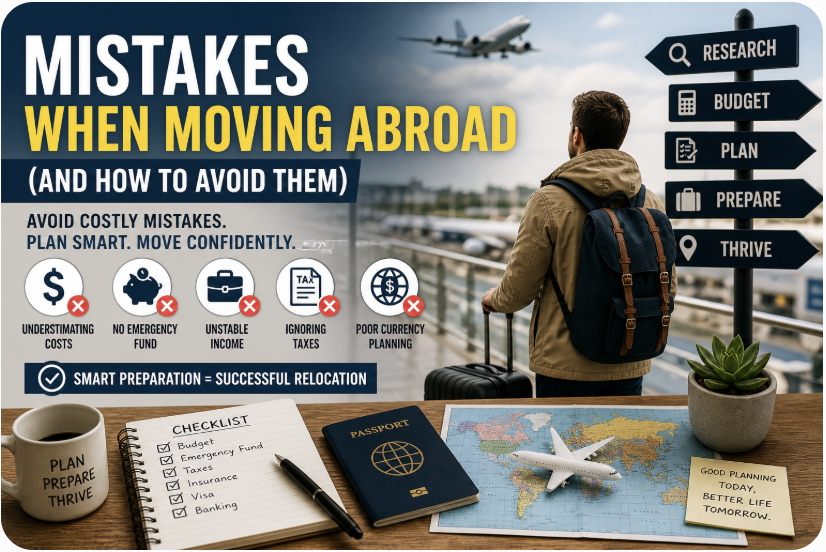
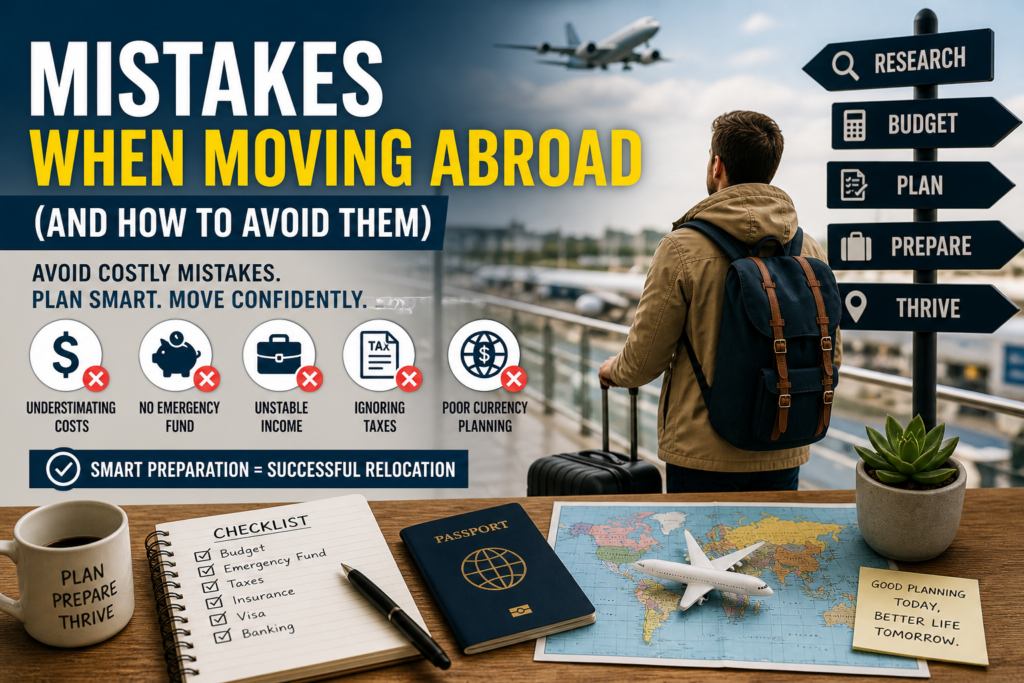
Underestimating cost of living
People often look at headline rent prices and ignore everything else. Everyday expenses—such as groceries, transport, utilities and healthcare—can be very different from what you’re used to. A cheap apartment doesn’t matter if food, insurance or public transport costs twice what you pay now. Before you move, build a full budget based on local prices, not assumptions.
Not building an emergency fund
Relocating abroad is unpredictable. Your job might start later than planned, paperwork can be delayed, or you could face a medical bill. Without savings to cover three to six months of expenses, even small setbacks become major problems. Start building an emergency fund long before you leave; it will give you breathing room if plans change.
Assuming income will be stable
Many relocators assume they can easily find work or that a remote contract will continue without interruption. Markets change and legal requirements can complicate remote work. Research the local job market, visa restrictions and payment methods to make sure your income is secure. Having multiple income streams or savings can help smooth out any gaps.
Ignoring taxes and legal obligations
Each country has its own tax system. Some require you to file returns even if you’re earning abroad; others impose social contributions or consumption taxes you may not expect. Failing to understand these requirements can lead to fines or unexpected bills. Learn the basics of the local tax system and, if necessary, consult a professional to make sure you stay compliant.
Poor currency planning
If you earn in one currency and spend in another, exchange rates can erode your income. Fluctuations make budgeting hard and can reduce savings. Consider setting up a multi‑currency account, transferring money when rates are favourable, and keeping a portion of your savings in the currency you spend. Understanding currency risk helps you avoid unexpected losses.
Lifestyle Mistakes That Create Financial Problems
Some mistakes stem from lifestyle choices rather than finance. Choosing a country too quickly—without visiting or understanding its culture—often leads to regret. Social media can make destinations look perfect, but curated posts don’t show the full picture. Be realistic about your lifestyle needs; for example, do you need public transport, local community, specific climate or language support? Unrealistic expectations about living standards or daily life can result in overspending or dissatisfaction.
Hidden Risks People Don’t Think About
Healthcare costs
Access to healthcare varies worldwide. Some countries offer universal coverage; others require private insurance. Check what’s available to residents, what you’ll have to pay, and whether you need international insurance. Unexpected medical expenses can quickly derail your budget.
Visa limitations
Visas often come with restrictions on work, length of stay or type of activities allowed. Moving without understanding these rules can jeopardise your job or legal residency. Make sure your visa allows you to live and work as planned and know how to renew it.
Banking restrictions
Opening a bank account isn’t always straightforward. Some banks require proof of residence or a work permit, while others limit transfers or charge high fees. Research banking options before you move, and consider keeping a secondary account in your home country to ensure you have access to funds.
Currency volatility
Currencies can rise or fall quickly. A weak local currency may make imports expensive; a strong one could reduce the value of your home‑country income. Monitor exchange rates and plan how to handle large payments like rent or school fees. Diversifying savings across currencies can offer some protection.
How to Avoid These Mistakes (Step‑by‑Step)
Step 1: Research real costs — Start by investigating the cost of living in your chosen destination. Look up prices for housing, food, transport, healthcare and other essentials. Creating a comprehensive budget ensures you’re prepared for the real numbers. Our guide on how to move abroad walks you through cost comparisons.
Step 2: Build a financial buffer — Aim to save at least three to six months of living expenses. This emergency fund will help you cover delays in income or unexpected expenses. It’s a crucial safety net that prevents you from relying on credit when things go wrong.
Step 3: Secure income first — Before relocating, confirm that your job, freelance work or remote contract is legally allowed and sustainable. Research local labour laws and payment methods. If you plan to look for work after arriving, ensure you have the right to work and a realistic timeline for finding employment.
Step 4: Understand taxes and legal setup — Learn the basics of your new country’s tax system, visa requirements and any obligations back home. You may need to file tax returns in both countries. Seek professional advice if your situation is complex. Our best country to move to guide explains how taxes and laws differ from place to place.
Step 5: Test before committing — Visit your potential destination for a few weeks or months to see if the lifestyle and costs align with your expectations. This trial run helps you identify hidden expenses and cultural differences. After you move, follow the steps in our start over after moving article to get your finances organised quickly.
Frequently Asked Questions
What are the biggest mistakes when moving abroad? The most common mistakes include underestimating the cost of living, moving without an emergency fund, assuming a stable income, ignoring taxes and legal obligations, and failing to plan for currency fluctuations.
How much money should I save before moving abroad? A general rule is to have enough to cover three to six months of living expenses, plus your relocation costs. The exact amount depends on the destination’s cost of living and whether you have secure income lined up.
Is moving abroad risky financially? It can be if you move without proper research and planning. However, with a detailed budget, emergency savings, a secure income plan, and an understanding of taxes and currency risk, you can minimise the financial risks.
Conclusion
Moving abroad can open up incredible opportunities, but only if you avoid the common pitfalls. Plan thoroughly, build a financial cushion, secure your income and learn about local laws and costs before committing. The difference between a successful move and a costly mistake often comes down to preparation.
My book on Gumroad:
https://ukandu0.gumroad.com/l/bteyh
Or on Amazon:
Build Financial Clarity
Join the Crown Altessa newsletter and receive:
• the free Financial Foundation Guide
• practical financial frameworks
• strategic decision-making insights
• tools designed to help you think long term about money and stability
If you want calmer, more structured financial thinking in an uncertain world, subscribe below.