
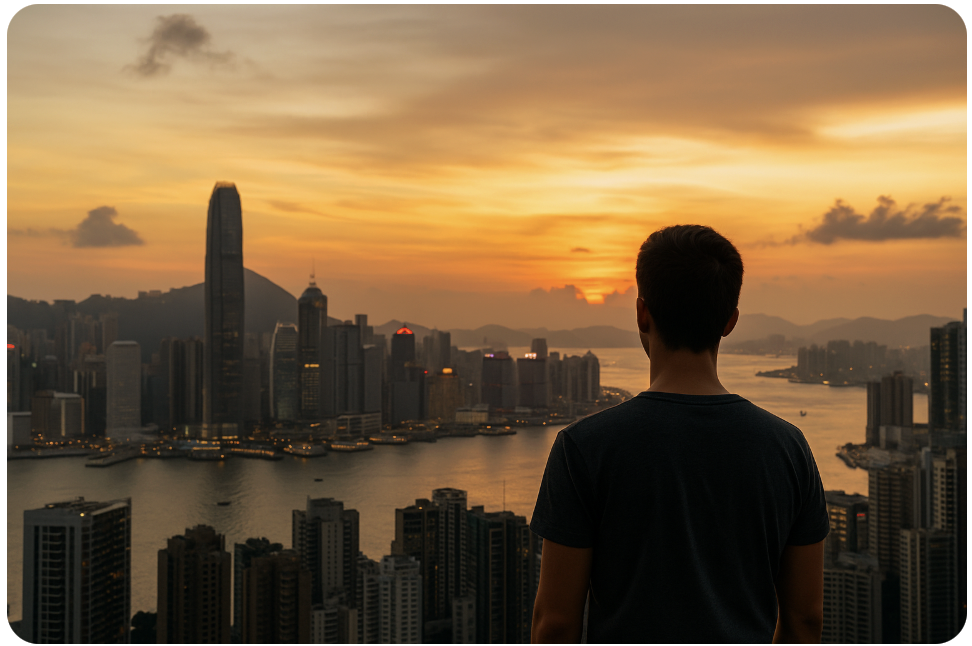
When global wealth moves, it doesn’t slip quietly into a country. It enters like a pressure system—changing the temperature, the atmosphere, and eventually the entire landscape.
Singapore is one of the clearest modern examples, but the pattern echoes across the world: London, Vancouver, New York, Dubai, and Hong Kong have all lived versions of the same story.
What begins as a search for stability by the rich becomes a slow erosion of stability for everyone else.
The irony is almost poetic.
Elites move to a place because it is stable.
But the moment enough of them arrive, the environment begins to shift under the feet of local families who have lived there for generations.
When Global Money Meets Local Reality
A country may welcome capital because it strengthens the economy, attracts investment, and signals international trust. But capital is not neutral. It changes the structure of everyday life, especially in places where land is limited and demand is high.
Here’s what often happens next:
1. Real estate transforms into a global marketplace
Housing stops functioning as a home and becomes an asset class.
The demand isn’t driven by local salaries—it’s driven by global wealth.
This is why property prices rise dramatically even when local wages do not.
2. Cost of living rises faster than income
When high-net-worth individuals move in, restaurants shift upward, services reposition themselves, and the general pricing of daily life creeps higher.
But while prices update instantly, salaries update slowly—if at all.
3. Locals feel like outsiders in their own cities
Neighborhoods change.
Property taxes rise.
Rent increases outpace wage growth.
Ownership becomes a privilege instead of a milestone.
And most importantly: people feel like they’re losing control.
This is the emotional dimension often ignored in economic analysis.
It’s not just about numbers—it’s about belonging.
Why the Wealthy Don’t Feel These Pressures
The wealthy don’t compete with locals—they compete with each other.
Their salaries aren’t tied to the local economy.
Their assets are globally diversified.
They don’t feel price increases—they cause them.
This is not intentional harm; it’s structural displacement.
And displacement often creates a psychological divide:
- Everyday people feel squeezed
- Elites feel insulated
- Governments struggle to balance both sides
This tension is the invisible cost of global financial mobility.
Stability for the Elite, Instability for Everyone Else
What the wealthy want most is predictability.
They move to environments where rules are clear and governments behave consistently.
But predictability for one group often becomes unpredictability for others:
- Predictable foreign investment → unpredictable housing prices
- Predictable banking frameworks → unpredictable local wage power
- Predictable capital inflows → unpredictable cost of living
This is how a city can look prosperous from the outside while citizens quietly feel their futures drifting out of reach.
It’s also why understanding economic structures becomes essential for everyday people. Without awareness, it’s easy to misinterpret these shifts as personal failure rather than structural transformation.
Why This Isn’t Really About the Rich at All
It’s not useful to blame the wealthy as individuals.
The issue is systemic: capital moves where it is treated best.
This behavior is as predictable as gravity.
But the consequences of that behavior—fragmented opportunity, higher living costs, reduced access to property—are felt most intensely by those who cannot move their money, their careers, or their families across borders.
And that is why your personal financial strategy needs to be built on more than income alone.
Relying solely on salary in an economy shaped by global wealth is like trying to stay afloat in rising water by standing on tiptoes.
You need assets, buffers, and safety structures that increase your resilience—starting with cash reserves and expanding toward flexible, longer-term wealth positioning.
A Critical Truth Most People Don’t Realize
When a city becomes a magnet for wealth, the cost-of-living crisis doesn’t happen because locals did something wrong.
It happens because locals are playing in a game whose rules changed without warning.
If you don’t understand the game, you will always think you’re losing by mistake.
If you do understand it, you start seeing patterns—and once you see patterns, you can build strategies.
And that’s where empowerment begins.
In Article 3, we’ll talk about how to build personal financial stability even if your city is becoming more expensive, more competitive, and more shaped by forces outside your control.
Next in the Trilogy
Article 3 — Building Stability When the System Shifts: What Everyday People Can Do
Coming next, we’ll explore:
- How to build a personal stability system even in unstable environments
- How to create financial buffers that mimic elite strategies ethically
- How to position your income and assets in a way that protects your future
- How to avoid being priced out by economic forces you don’t control
Related Resources
- The Ascent: From Metals to Real Estate — Parking Money the Elite Way
- The Foundation: Liquidity First — ETFs, Index Funds, and Your First Real Safety Net
- Owning the Future: How to Build Stability With Smart System Creation
- My book on GumRoad: How Personal Finance Made Simple Can Transform Your Future
- Or on Amazon:
Build Financial Clarity
Join the Crown Altessa newsletter and receive:
• the free Financial Foundation Guide
• practical financial frameworks
• strategic decision-making insights
• tools designed to help you think long term about money and stability
If you want calmer, more structured financial thinking in an uncertain world, subscribe below.